
NSF COPES- Strong Coasts. Coastal zones, while vital to local communities, face significant risks from both land and sea, such as waves, storm surges, floods, and sea level rise, all of which are exacerbated by climate change. Protecting and restoring coastal ecosystems like coral reefs and mangroves can help mitigate these threats while simultaneously supporting local economies and enhancing societal resilience. This initiative examines the risks and benefits to communities in tropical regions that rely on coral reefs, where efforts to replenish coral reef and mangrove ecosystems have been piloted and show potential for scaling to regional and national levels as part of Nature-based Solutions (NBS). The project collaborates with coastal communities in Florida, the U.S. Virgin Islands, and Belize to co-create new knowledge on how ecosystem-based approaches can address climate risks and support equitable and effective NBS. By bringing together expertise in engineering, ecology, and social sciences across seven academic institutions and multiple local and regional partners, the project broadens the potential impact to the entire U.S. and, ultimately, to global tropical coastlines beyond the initial focus regions. Boston University team partners with University of South Florida and other institutions on this grant.
Bureau of Ocean Management (BOEM). The BU team designed the Standardized Integrated Ecosystem-Based Assessments (SIEBA) in collaboration with the BOEM and other partners, which aims to advance ecosystem-based management (EBM) for activities on the U.S. outer continental shelf (OCS). Focusing initially on offshore wind (OSW) energy development in the Gulf of Maine (GoME), the study proposes a national framework for EBM and provides tools for decision support. Central to the project is the development of the SIEBA-MIMES dynamic ecosystem model, which integrates data and expert knowledge to assess multiway trade-offs associated with OSW development. This model allows BOEM to evaluate the impacts of OSW activities on ecosystem functions, fisheries, wildlife, and cultural values, while considering socio-economic implications such as job creation and environmental justice. The SIEBA-MIMES model builds on the MIMES framework, which incorporates a coupled human-natural systems approach to account for changes over time, offering a significant enhancement to BOEM’s existing static models. The study also emphasizes the importance of including non-market sociocultural impacts, particularly those affecting marginalized communities and indigenous groups.
NSF IRES – Indonesia. Coastal cities worldwide are facing the enormous task to become resilient against physical, social and economic challenges, in addition to challenges due to climate variations. Semarang (Indonesia) is one of the cities that exemplifies the multiple threats affecting society, economy, environment, and infrastructure. Assessing the impacts of present and future coastal hazards requires an understanding of the complex interactions between geological, hydrological, biophysical and socioeconomic systems. This can be best achieved by an integrated approach that includes research on both land and sea dynamics to identify natural and anthropogenic factors, their relative influences and related consequences. This project seeks to undertake effective, innovative, and transformative research to understand how coastal environments respond to natural and anthropogenic factors.
China Belt Road: Global financial investments in energy production and consumption are significant since all aspects of a country’s economic activity and development require energy resources. In this paper, we assess the investment trends in the global energy sector during, before, and after the financial crisis of 2008 using two data sources: (1) The Dealogic database providing cross-border mergers and acquisitions (M&As); and (2) The “fDi Intelligence fDi Markets” database providing Greenfield (GF) foreign direct investments (FDIs). We highlight the changing role of China and compare its M&A and GF FDI activities to those of the United States, Germany, UK, Japan, and others during this period. We analyze the investments along each segment of the energy supply chain of these countries to highlight the geographical origin and destination, sectoral distribution, and cross-border M&As and GF FDI activities.
Natural Gas Leaks This is a NSF funded project. This interdisciplinary research project examined the connectivity and functional interdependencies among co-located, critical infrastructure systems, such as gas, water and sewer pipes, roads, and the urban canopy, as well as the networks of people and institutions that depend on and manage and maintain the urban infrastructure. The project centered on an aged, leaking natural gas pipeline system that damages the urban forest canopy, creates road repair problems, degrades air quality, contributes to atmospheric warming, and can endanger human safety through explosion risks. By explicitly mapping out hidden and unrecognized physical and social linkages among critical urban infrastructure systems, the project provides a foundation for more effective, coordinated urban infrastructure management and maintenance. Yaxiong Ma and Jessica Wright were supported on this grant. The project resulted in publications and presentations. Gopal continues working with Nathan Phillips on this topic.
Public Health in Kenya: This research undertaken with Professor Lawrence Were involved students in various GIS classes (2018-2020) focuses on marginalized and high risk populations such as informal traders and HIV+ individuals including pregnant women and their children. We use GIS and geospatial analysis to examine accessibility and utilization of health facilities and insurance.
National Science Foundation – GK 12 Grant Gopal is the Principal Investigator on a five-year, $2.8M NSF GK12 grant that integrates STEM research related to global change into K-12 science curricula in local schools, through research fellows, who 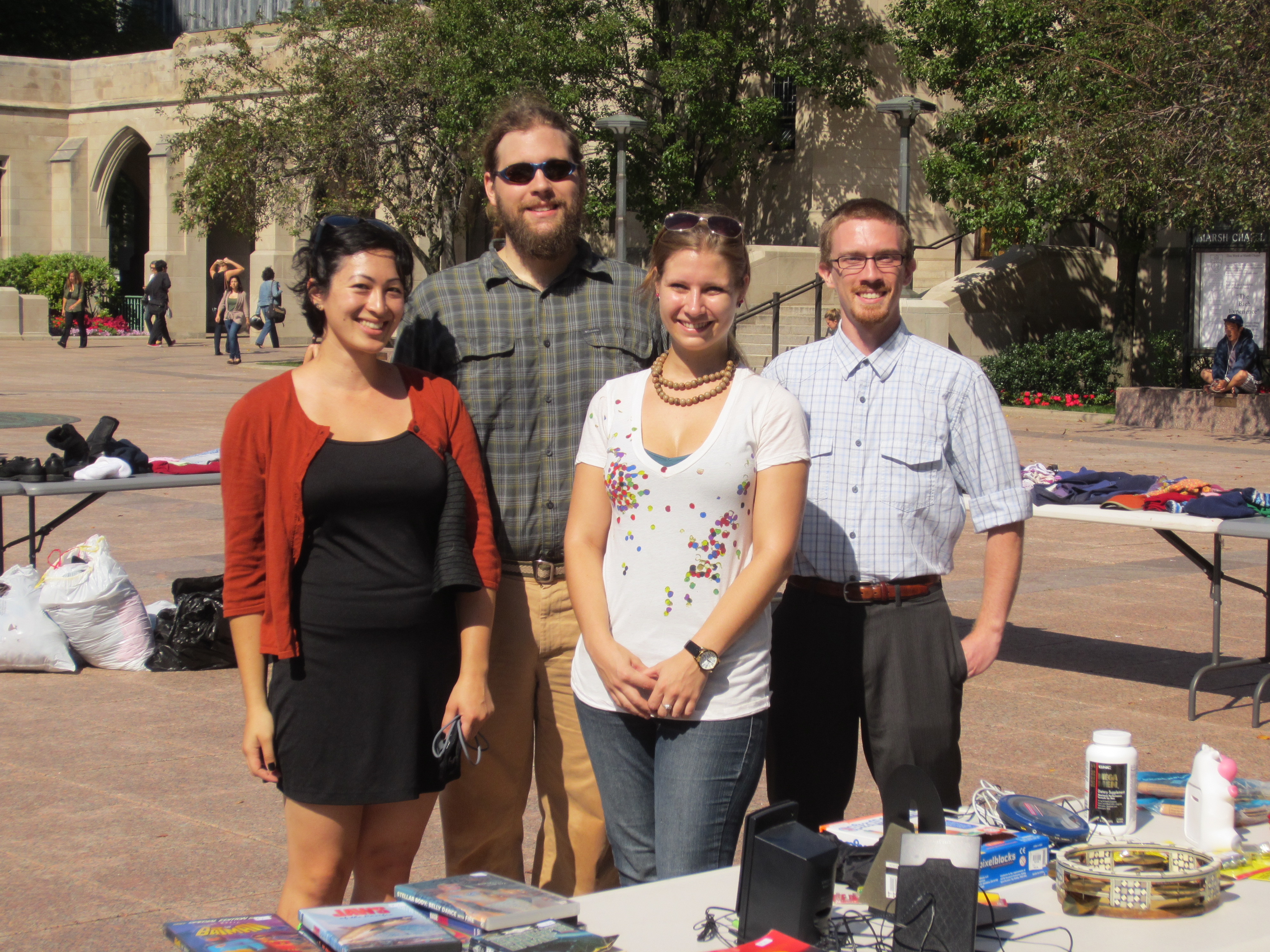 are graduate students in the Departments of Earth & Environment, Astronomy, Biology, Physics, Chemistry, Mathematics & Statistics and the School of Engineering. Details of this grant including Co-PIs are in http://gk12glacier.bu.edu/
Les Kaufman, Irit Altman, Josh Pitts, and Roel Bourmans.
The Mekong River and Tonlé Sap ecosystem deliver goods and services to nearly three million people living in or around the lake such as drinking water, fish and other food, and protection from storms. In this work we focus on understanding and modeling critical ecosystem services including fish, rice and biodiversity in the region. Our goal is to understand which natural resource management decisions ensure that livelihood and wellbeing opportunities are protected for Cambodians now and into the future. Our website with all MIDAS details are here.