New Biomarker Signature for COPD

Former BU innovator of the year– Professor and Chief of Computational Biomedicine in the Department of Medicine, Dr. Avi Spira, M.D, Ph.D., has come up with a new biomarker signature to improve the treatment of Chronic Obstructive Pulmonary Disease (COPD), which affects 14.8 million individuals in the United States, and is predicted to become the third leading cause of death by 2030.  Given the complexity of this disease, there are no disease modifying agents available. According to Dr. Spira, this is largely due to the fact that “very little is known about the molecular mechanisms underlying COPD pathogenesis and progression”.   Dr. Spira and his team including Associate Professor Marc Lenburg, Ph.D. and Assistant Professor Katrina Steiling Ph.D. used whole-genome expression profiling on bronchial brushings from smokers with and without COPD is used to identify the gene signature that associated with COPD.  98 genes were identified whose expression levels were associated with COPD disease state and were reversible with effective treatment.

“We think our 98 air way gene signature can serve as a biomarker that reflects the presence of COPD and severity of lung function impairment,” says Dr. Lenburg.

According to the team, this technology could also be used to shorten the clinical development timeline by serving as biomarker of patient response to COPD therapy.  As an Attending in the Medical Intensive Care Unit at Boston Medical Center, Dr. Spira notes that another impediment to developing effective therapies is that currently clinicians use lung function test to determine if patients are responding to therapy, which requires at and at least six months after medication to evaluate the effect.

“Preliminary results suggest that our airway gene signature may work as an intermediate biomarker of response to COPD therapy, and could significantly reduce the time needed to observe and evaluate the effectiveness of COPD medications” says Dr. Steiling.

While the lab continues to advance this and other programs, BU OTD is currently seeking a commercial partner to develop the COPD biomarker signature.

Dr. Spira is also the founder and scientific advisor to AllegroDx Inc., a molecular diagnostics company focused on the development and commercialization of innovative genomic tests to support the diagnosis and management of lung cancer.

For partnering opportunities, please contact:

April Effort

Director, Business Development, Life Sciences

aeffort@bu.edu

Treating IgE-Mediated Diseases with Modified Soluble CD23

Through her work with human schistosomiasis, Dr. Lisa Ganley-Leal has identified a compound that may have the ability to treat severe allergic diseases, such as a moderate to severe asthma. The new therapeutic holds the promise of improved efficacy for multiple allergic diseases combined with a lower risk of side effects. The current treatment for severe allergic asthma, in contrast, has a risk of causing anaphylactic shock and is only effective in 60-70% of patients. OTD has secured the IP in the US, Europe, and Japan.  We are currently seeking a partner to continue development of this novel polyprotein therapeutic.

Dr. Lisa Ganley-Leal’s primary research focus is on defining the bona fide role of IgE in human immunity.  IgE has been primarily studied in allergic disease where the antibody plays a role in generating the chronic inflammation.  However, in parasitic disease, IgE has a beneficial role, namely in host resistance to infection with worms.  For those infected, the parasite cleaves CD23 from the host cells’ surface, creating soluble CD23 that binds IgE, which has been found to reduce allergic reactions. The laboratory is focused on defining immune correlates of protection in human schistosomiasis including mechanisms by which IgE and IgE receptors play a role in generating protection.

Her studies in this area are in collaboration with the Centers for Disease Control and Prevention and the Kenya Medical Research Institute. To establish a mechanistic understanding of field clinical data, her laboratory developed a model system using human cells to recapitulate the inflammatory milieu of parasitic helminth disease.   The laboratory has recently published papers describing novel roles of IgE in human immunity highlighted articles.

Through a collaboration with fellow BU scientist Dr. John Connor, naturally occurring soluble CD23 has been modified to bind IgE with a greater affinity in order to improve its therapeutic effect. This modified CD23 (ET523) has been tested in transgenic mice that express human IgE receptors as exhibited below. When the mice are given IgE alone, it provokes a strong allergic response. When the same mice are given the new therapeutic concurrently with IgE, the allergic response is greatly reduced. This study validates prior in vitro work, and hints at the potential for this compound to become an effective treatment for allergic diseases.

For partnering opportunities, please contact:

Harald Steltzer

Director, Business Development, Life Sciences

hsteltz@bu.edu

Transgenic mice given IgE alone or IgE together with ET523. IgE leads to intense scratching.

In vivo test results demonstrating the effectiveness of ET523 to reduce allergic response.

Message from the Director – The Year in Review

Vinit picture for newsletter 1Dear Reader,

We had an exciting 2011 at OTD with key accomplishments summarized below. The group is now complete and we are projecting 2012 to be very active, with several new ventures in the pipeline and many industry license discussions on-going. We have significant commercialization activity emerging from (1) Coulter Translational Partnership in the Biomedical Engineering department (led by Sol Eisenberg); (2) the NIH-funded Clinical and Translational  Science Institute (led by David Center); (3) School of Management’s ITEC entrepreneurial activities to scale student involvement in our commercialization efforts (led by Paul McManus); (4) the Department of Medicine (led by David Coleman); (5) Boston Medical Center (led by Kate Walsh) and; (6) the Fraunhofer Institute of Manufacturing (led by Andre Sharon).

Key accomplishments in 2011

Maximize Collisions

  • Student Analyst training (80+ attendees)
  • TDDR 2011: Tech, Drugs and Rock n Roll (650+ attendees)
  • $50K Ignition Grants (5) and $200K Launch Awards (1)
  • 30% increase in ideas submitted by faculty
  • Pfizer CTI agreement for new biologic drug development
  • Kindle Mentoring (80+ mentors, 45+ mentees, new website, mentor-in-residence program)
  • Innovator of the Year Award (Boston Globe coverage)
  • BU spin-off Novophage launches with $5.7M series A of venture capital

Minimize Friction

  • BU Express Startup License (completed and being used)
  • Online MTA and CDA agreement form
  • IP & licensing team formed with three patent and transaction lawyers

Operational Excellence

  • Hired six new staff at OTD and one at Coulter/BME
  • Established a second office on the medical campus
  • Submitted a FY2013 budget 8% lower than FY2007 inflation adjusted
  • 15+ student volunteers and hires

The OTD organization evolved considerably in 2011. You can find details about our organization including subject related contact list here.

Sincerely,

Vinit Nijhawan, OTD Managing Director

Spotlight on: INTICA Biomedical

Getting a New Venture off the ground can prove a daunting task even for the most experienced entrepreneurs. To help these fledgling companies get up on their feet, the Office of Technology Development awards an outstanding company based on research from an entrepreneurial faculty member of Boston University with the Launch award. The award consists of a grant of up to $200,000 aimed at helping faculty commercialize technologies they have researched and developed at the university. Furthermore, OTD’s New Ventures group works closely with each Launch Award recipient, providing the tools and resources that can best assist the growth and development of the business in its earliest stages. By investing in its own faculty, BU can better facilitate the commercialization and dissemination of internally developed technologies.

OTD gave this year’s Launch Award to INTICA Biomedical. Their product is a cancer therapeutic; specifically, a companion diagnostic for breast cancer, pancreatic cancer and glioblastoma. These lethal diseases have extremely high mortality rates: the five year survival rate for pancreatic cancer is below three percent, and the survival outlook for a patient diagnosed with glioblastoma lies between 6-12 months. INTICA Biomedical’s companion diagnostic seeks to identify patients which are most likely to respond to INTICA’s novel therapeutics. “By identifying patients which are most likely going to respond to therapy, we have the potential to significantly impact patient outcomes,” says Christine Bunt, CEO of INTICA Biomedical. ” Intica’s novel treatments & companion diagnostic breaks new ground in the cancer market. The therapeutics selectively target cancer stem cells, cancer cells and tumor blood vessels.

Read more about the Launch Award here.

OTD Ignition Award Recipients for 2011

The Office of Technology Development’s Ignition Award is designed to help new technologies bridge the (funding?) gap between discovery-oriented research and subsequent development.  By providing funding that helps these fledgling technologies reach specific goals or milestones (to show proof of applicability), the Ignition Award helps further them on the path toward commercialization.  Each year, applicants submit proposals which are selected based on the quality of the research, the market size and commercialization potential of the proposed product, and the ability of the Ignition Award capital to advance the research.  The proposals are evaluated by a panel of venture capitalists and industry experts, as well as members of the Office of Technology Development’s Business Development team.  This year’s selection process differed from its’ predecessors’ in its focus on existing technologies, whose creators had already worked extensively with OTD.  Because of how developed these technologies were, the selection process was extremely competitive, and produced three very qualified winners:

C. Abraham: Alleviating cognitive degeneration with upregulation of the Klotho protein

cabrahamCarmela Abraham’s work with the protein Klotho has provided a potential method of alleviating cognitive decline in aging organisms.  In the lab, Abraham discovered a deficiency of Klotho in aging monkeys and mice, which seemed to correlate with the development of cognitive decline.  Furthermore, she found that overexpression of Klotho resulted in a 30% increase in lifespan of transgenic mice.  Her proposed product would utilize these findings to improve the overall health and mental well-being of any organism by elevating its levels of Klotho.

C. Cassandras: Making the search for a parking spot easier with Smart Parking

Cassandras’ “Smart Parking” system hopes to ameliorate the stress of finding a parking spot while simultaneously reducing fuel consumption and pollution. Using GPS technology, the Smart Parking system helps a driver locate the best parking space in any given urban environment based on the individual’s predetermined selection criteria. By accounting for proximity of the space to the driver’s destination as well as the cost of parking there, this system helps to maximize the efficiency of any location’s parking capacity. According to Cassandras’ team, their system help to increase parking space utilization by 10-20% over existing guidance-assisted systems, which helps to increase revenues for parking operators.

G. Denis: Discovery of a protein family that uncouples obesity from Type-2 Diabetes and Inflammation

bergethonGerald Denis has used genetic manipulation of the BET protein family to uncouple obesity from Type-2 Diabetes and inflammation.  They have produced mice that are metabolically healthy despite being severely obese—by suppressing the expression of Brd2 (a member of the BET family), these mice are protected from Type-2 Diabetes.  Denis proposes to use these findings to produce a few BET inhibitor compounds which could help prevent or alleviate those at risk (or suffering from) Type-2 Diabetes.

Read more about the Ignition Awards here.

New Ventures – Renuka Babu

renukaAs Boston University’s Director of New Ventures at the Office of Technology Development, my focus is to help build new companies based on technologies being created at the University. I was excited by the tremendous interest of faculty in participating in the creation of new ventures.  I’ve found our experienced researchers are keen on finding new ways to impact society and translate their cutting-edge research into influential ventures. BU thrives on the spirit of “One BU,” where an engaged and collaborative community is also helping to create fertile ground for cultivating the next big idea.
Translating…
Often the technology we are presented with is early-stage and novel. The New Ventures Group (NVG) dedicates a fair amount of time into capturing the imagination of the investor base by giving them comfort in the development route and market size of a final product. Often we will spend months developing a story and pitch that makes it easier for the technology to translate into a business case to attract an investor.
Leadership…
Perhaps one the most important factors in determining the success of a new venture lies within having a skilled and experienced management team.  Unfortunately, a vast majority of start-up companies fail in spite of a promising core technology due to poor management. The NVG relies on our vast network within the entrepreneurial community to tap into some of the best and most experienced CEOs to lead our new companies. The KINDLE mentoring program founded by OTD is part of this network. Often those who have been accepted as part of our mentoring program help companies early in their development and can sometimes even take a leadership role later on.
Funding…
At Boston University, we also have the financial means to turn some of our earliest ideas into new ventures. We run the biannual IGNITION award process that provides up to $50,000 in grants to researchers, helping them achieve inflection points that will help determine their viability as a new venture. We also finance the LAUNCH award, a $200,000 award given to a start-up that often serves as a bridge to additional financing.
Support…
Boston University’s Office of Technology Development is very supportive of the New Venture process. Our office has a goal of “minimizing friction and maximizing collisions,” effectively reducing the number of administrative obstacles for a new venture to hit the market. We have published our express licensing agreement on our website and this has helped reduce the time and efforts to get a new venture out the door. With a number of us in the group coming out of industry and start-ups, we are excited to bring our experience and enthusiasm to the entrepreneurial community at Boston University. I encourage anyone interested to reach out, and look forward to hearing from you!
Contact Renuka Babu at rbabu@bu.edu or read more about her here!

AngelHack Hackathon 2012

With up to $55,000 in prizes to give away, the angelHack Hackathon is a great opportunity for any Boston-area entrepreneurs looking to build a start-up.  Contestants come from all over the east coast to participate in the Hackathon, which kicks off on March 3rd with a networking event.  There, attendees can talk with other likeminded entrepreneurs and pitch their ideas to investors.

The top Boston University team will win free airfare and lodging at TheGlint Mansion in San Francisco, as well as guided tours to meet some of Silicon Valley’s top start-ups.

The first 20 BU students to sign up can get their ticket fees waived by entering the code “BU.”  After that, enter the code “collegehack” for a 50%-off discount!

Sign up for angelHack’s Hackathon here!

Prizes Include:

Top teams: Meals with investors and startup documents

1st Place College: Flights to San Francisco and lodging at TheGlint Mansion

1st, 2nd, 3rd Boston Teams: Advancement to 2nd round of MassChallenge (live demo)

1st Place Gaming: Acceptance into Yetizen Gaming Accelerator (avg. graduate raises $500k)

1st Place Social Impact: Advanced Acceptance to Hub Ventures and funding (conditions apply)

(Coming soon): Tickets and Airfare to Startup Workaway Thailand

(Coming soon): Large $$$ prize to top collegiate teams and a lot more to come.

Message from the Director: MedTech and BU

Vinit picture for newsletter 1Dear Reader,

Boston University’s Graduate BioMedical Engineering (BME) department is ranked #8 by US News and World Report.1 In 2010-2011, BME’s 33 primary faculty members attracted $24.3 million in external research funding. Many BME faculty collaborate with clinicians and medical researchers at the BU School of Medicine.

As an endorsement of this, BME was one of the original ten universities to receive a five-year Coulter Foundation grant to translate biomedical engineering research to products and services that can benefit patients.2 About $3.6 million in grant funding has been distributed to BME researchers over the past five years to advance their research towards commercialization.

Amongst these BME researchers is the 2010 BU Innovator of the Year Award recipient, Professor Mark Grinstaff3 who has a number of projects that have been Coulter funded, including two that are now being commercialized by a startup companies: Flex Biomedical and AcuityBio. Founded in 2007, Flex has raised $2.2 million in angel and SBIR funding. Acuity Bio recently received $1.4 million in SBIR funding.4

The medical device industry in Massachusetts is one of the preeminent industries in the region and certainly is in the top five globally.5 There are over 250 medical device companies in Massachusetts shipping over $4 billion in products. BME has strong connections to the Massachusetts medical device industry with many of our students going to work in these companies and with active research collaborations.

Sincerely,

Vinit Nijhawan, OTD Managing Director

  1. Best Biomedical and Bioengineering Schools, U.S. News.
  2. Coulter Foundation website.
  3. Mark Grinstaff receives BU’s First Innovator of the Year Award, Office of Technology Development, Boston University.
  4. AcuityBio, Inc. has been awarded a $1.4M Phase II SBIR grant, Office of Technology Development, Boston University.
  5. The Medical Device Industry in Massachusetts, Clayton-Matthews, Alan, UMass Boston.

AcuityBio wins $1.4M SBIR grant to develop drug-eluting ABC Mesh™ for lung cancer patients

acuitylogoLung cancer is diagnosed in over 220,000 patients in the U.S. every year, and results in more cancer deaths than breast, colorectal, and prostate cancers combined.   If detected at an early-stage, lung cancer can be treated using standard of care surgery.   Most of these patients treated with surgery have reduced lung function and surgeons would prefer to remove less lung tissue from around the margins of the tumor rather than compromising the patient’s lung function further. However, the smaller the margin removed from around the tumor, the higher the risk of recurrent disease.  Systemic chemotherapy and radiation therapies are not effective for early stage patients and have significant negative side effects.   Unfortunately, even with the best available treatment, about half of the 50,000 early stage patients treated annually with surgery, will develop a fatal recurrence.  Clinician and patients are desirous of new and more effective localized, low toxicity treatment options which can prevent cancer recurrence.

AcuityBio article pictureFounded in 2008, AcuityBio started as a collaborative effort by Boston University’s Dr. Mark Grinstaff (Professor of Chemistry) and Brigham and Women’s Hospital Dr. Yolanda Colson (Cardiothoracic oncology Surgeon and Scientist) to improve the current standard of care for lung cancer patients and address the major clinical problem of tumor recurrence.  Their goal was to create a unique and simple-to-use drug-loaded implant that could reduce cancer recurrence by locally delivering therapeutic levels of drug to residual tumor cells for extended periods of time.  Utilizing Colson’s experience in surgical oncology and Grinstaff’s knowledge in polymer chemistry and engineering, the team developed the ABC MeshTM.  Together with Jesse Wolinsky, a post-doctoral researcher in Grinstaff’s lab, the team published several papers on the technology in March of 2010.  A few months later, First Founders Ltd. introduced Dr. Jay Schwartz to the inventor team to act as the new company’s CEO.  AcuityBio’s biocompatible and biodegradable ABC MeshTM will be stapled in at the edge of the resection during normal tumor removal surgery and deliver chemotherapeutic drug locally to the tissue over 50 days and then be absorbed by the body.  By localizing the administration of chemotherapeutic agent, the optimal dose of drug can be delivered over a time span where it will be most effective and result in little to no side effects.  The ABC MeshTM technology has come a long way from its inception and will be headed to the clinic within two years.

“The technology we developed allows us to deliver drug right to the resection site,” says Mark Grinstaff, “Currently, there is no such standard of care that exists today.  It all comes down to whether you can prevent the cancer from recurring.  If you can reduce recurrence then you can increase survival, and that’s what we’re working towards.”

The National Cancer Institute of the National Institutes of Health recently awarded AcuityBio with a prestigious Phase II SBIR grant worth $1.4M, which will fund the rest of the preclinical work required to apply to the FDA for an IND, a prerequisite for entering clinical trials.  AcuityBio is now raising a $3.5M series ‘A’ round which will further help accelerate their technical development and commercialization plans.

“The value of this grant goes way beyond the monetary value in two ways” says Jay Schwartz, CEO. “This grant money will help us accelerate our ABC MeshTM development plans and simultaneously validates the novelty of our technical approach to localized drug delivery.  We are pleased that we are continuing to progress rapidly toward helping cancer patients live better quality and longer lives. “

AcuityBio, Inc. is headquartered in the Greater Boston area.

Please see the company website www.acuitybio.com, or contact Jay Schwartz CEO (jay@acuitybio.com) for further information.

Spotlight on the Wallace H. Coulter Translational Research Partnership at BU

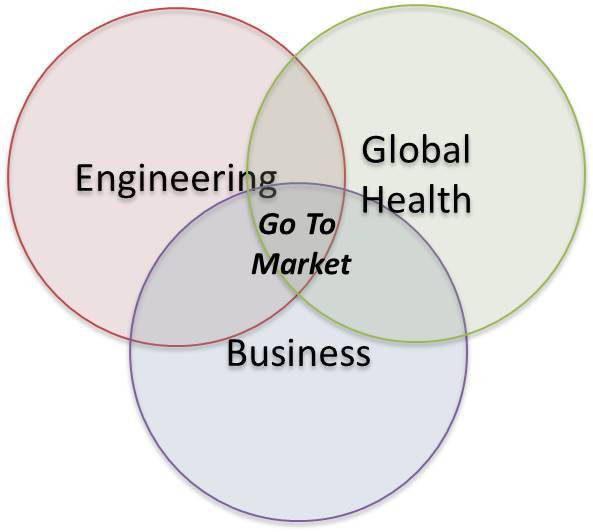
The Wallace H. Coulter Foundation sponsors an annual program that provides gap funding to accelerate commercial development of medical technologies invented at the university.  “The Coulter program intends to bring ideas together from different parts of the university,” says Art Rosenthal (Professor of Practice at BU).  “We want to increase collaborations between biomedical engineers and clinicians at the medical school to develop university research projects into prototypes that can be positioned commercially.  We want to provide the funding, oversight and expertise that help these projects accomplish critical steps in developing their ideas into commercially viable products.”

Jen Marron, Administrative Director of the Coulter program at BU says, “The overall mission of the foundation is ‘Science Serving Humanity,’ and the best way to do that is to take medically relevant research and help them develop a product that gets to market.”  To be considered for funding, research projects must have clinical applications and be jointly developed by a BU-affiliated biomedical engineer and/or clinician.  Ultimately, the Coulter Foundation seeks to assist with gap funding and commercial expertise that prepares the technology for commercialization, as well as help it obtain industry or follow-on funding.

To date, the Coulter partnership has made $3.58M in awards to 35 projects at BU in its first five years of existence.  “Some of our projects have become start-ups; others have remained in-house as we continue to develop them into a commercial interest,” says Marron.  The Coulter-BU partnership has now entered into its second 5-year phase where $500K from the foundation is matched by the university, effectively providing $1,000,000 annually in gap funding for medical technologies.  “This funding support demonstrates the University’s commitment to advancing translational research,” says Marron.

One of the partnership’s success stories is development of a portable bionic pancreas by Ed Damiano (Associate Professor of Biomedical Engineering) and Steven Russell (Endocrinologist, MGH).  Damiano has developed a computer algorithm that regulates blood glucose in diabetics by communicating with glucose sensors and insulin-glucagon or insulin-dextrose pumps.  The product would help with treating the most serious, acute and long-term complications of type 1 and insulin-dependent type 2 diabetes.  “We funded the Damiano-Russell project very early in its inception,” says Marron, “We funded an animal study that turned out to be the basis for all the other experiments that Damiano and Russell are now doing.  Like many of our other projects, we’re trying to build as much value as we can before it is ready for commercialization.”

For more information about the Coulter Translational Research Program at BU, please visit: http://www.bu.edu/bme/research/coulter/about/