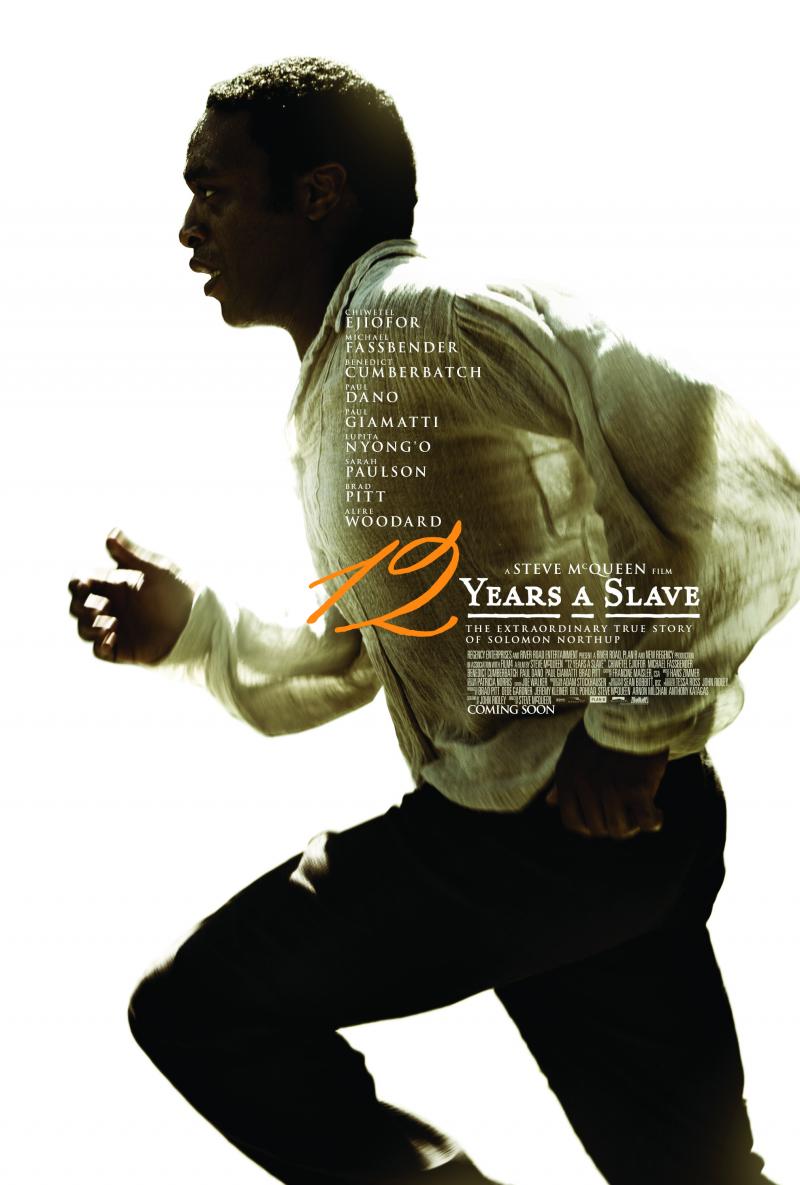
There is Nothing to Forgive: An Interview with John Ridley

12 Years Poster12 Years a Slave is a beautiful, horrifying, and challenging film. It is the story of the capture and enslavement of Solomon Northup, a free black man from New York, after he is duped into taking his violin performances dangerously close to the border and slave states on a promising concert tour. He quickly finds himself in chains, and then in Louisiana, no longer his own master.  For the next twelve years, he is passed from plantation to plantation, finding ways to survive amongst unspeakable suffering. Forced to keep his past unspoken, his ability to read and write hidden, and his passions in check, Northup is nevertheless determined to make the best of his situation, biding his time while he keeps the hope alive that he will one day return to his family.

I spoke with the screenwriter John Ridley, who adapted Northup’s memoir on spec, hoping that his project with director Steve McQueen would be produced if he could make it good enough. When I first got on the phone with Ridley, I told him that while I did not enjoy the film, per se, he had certainly accomplished that goal. Northup’s journey is a tear inducing, harrowing experience to watch. Over a century of American film has not been able to produce such a powerful depiction of the peculiar institution. Our conversation touched on everything from the religious lives of slaves to Hollywood’s failure to provide us with sufficient images of the era. Continue reading There is Nothing to Forgive: An Interview with John Ridley

Woody Guthrie the Commonist: An Interview with Bill Nowlin

American_Radical_Patriot_Cover_Art_Product_ShotWoody Guthrie: American, Radical, Patriot, gathers together the complete Library of Congress recordings in one place for the very first time, including the interviews done by Alan Lomax, the VD demos, and the BPA songs written to help celebrate the power of the Bonneville Power Administration as it powered up the Pacific Northwest. In the 1940s, Guthrie sang songs about Hitler for the war effort and donned a soldier’s uniform. He was a man of the people, singing for them and their causes. He was a “commonist”, celebrating the power of the individual, and, in these recordings, the government as well.  All of this makes for a complex character, and a wonderful new set of music, courtesy of Rounder Records.

I spoke with Bill Nowlin, co-founder of Rounder Records and producer of the new set. We talked about Guthrie’s position here as he worked for the government, his lasting influence, and what may still remain in the vaults for our future enjoyment. Continue reading Woody Guthrie the Commonist: An Interview with Bill Nowlin

City Lights at the Dawn of the Talkies: An Interview with Jeffrey Vance

CityLights_DFcoverCity Lights contains one of the most powerful sequences in all of American cinema, or any cinema for that matter. A woman, once blind, finally meets the man she believes was her wealthy benefactor. Their eyes meet through the glass of her flower shop, the full flowering symbol of her renewed life. She approaches him out of pity, believing him to be a homeless man being taunted by kids out on the street. Seeing that he is downtrodden and in need, she goes out to press a coin into his palm.  Touching his hand, she realizes that this Little Tramp, not some wealthy businessman, was her benefactor all along. Fresh from being released from prison for the very act that helped save her vision, the Tramp can only smile and cry. These final moments could only be pulled off by Charlie Chaplin. And now, in the latest of a series of releases by the Criterion Collection from the Chaplin archives, we can enjoy this “Comedy Romance in Pantomime” in its newly restored form.

Recently, I spoke with Jeffrey Vance, author of Chaplin: Genius of the Cinema, who provided the audio commentary on the new Criterion Collection release of the film. We spoke about the fragile state of silent films, Chaplin’s directing methods, his politics, and of course, the art of pantomime at a time when Hollywood was turning to sound and the talkies. Continue reading City Lights at the Dawn of the Talkies: An Interview with Jeffrey Vance

Houses Without Names Book Review

Houses without NamesHubka, Thomas C. Houses Without Names: Architectural Nomenclature and the Classification of America's Common Houses. , 2013.

“But it doesn’t have to be that way!” That is the refrain in Thomas Hubka’s Houses Without Names (University of Tennessee Press, 2013), challenging the status quo of how and why we look at housing the way we do. The long awaited second volume in the Vernacular Architecture Studies series, edited by Thomas Carter and Anna Vemer Andrzejewski, this volume picks up where Carter and Elizabeth Collins Cromley left off in Invitation to Vernacular Architecture (University of Tennessee Press, 2005), challenging readers to apply the basic skills presented in IVA to a vast and poorly understood group of buildings - the common house. Written for both the student of architecture history and seasoned professionals, Houses Without Names is both a guide to conducting fieldwork on vernacular houses and a means by which the practices and assumptions of the field may be closely examined. Continue reading Houses Without Names Book Review