At the Archive: The David Maysles Collection at HGARC

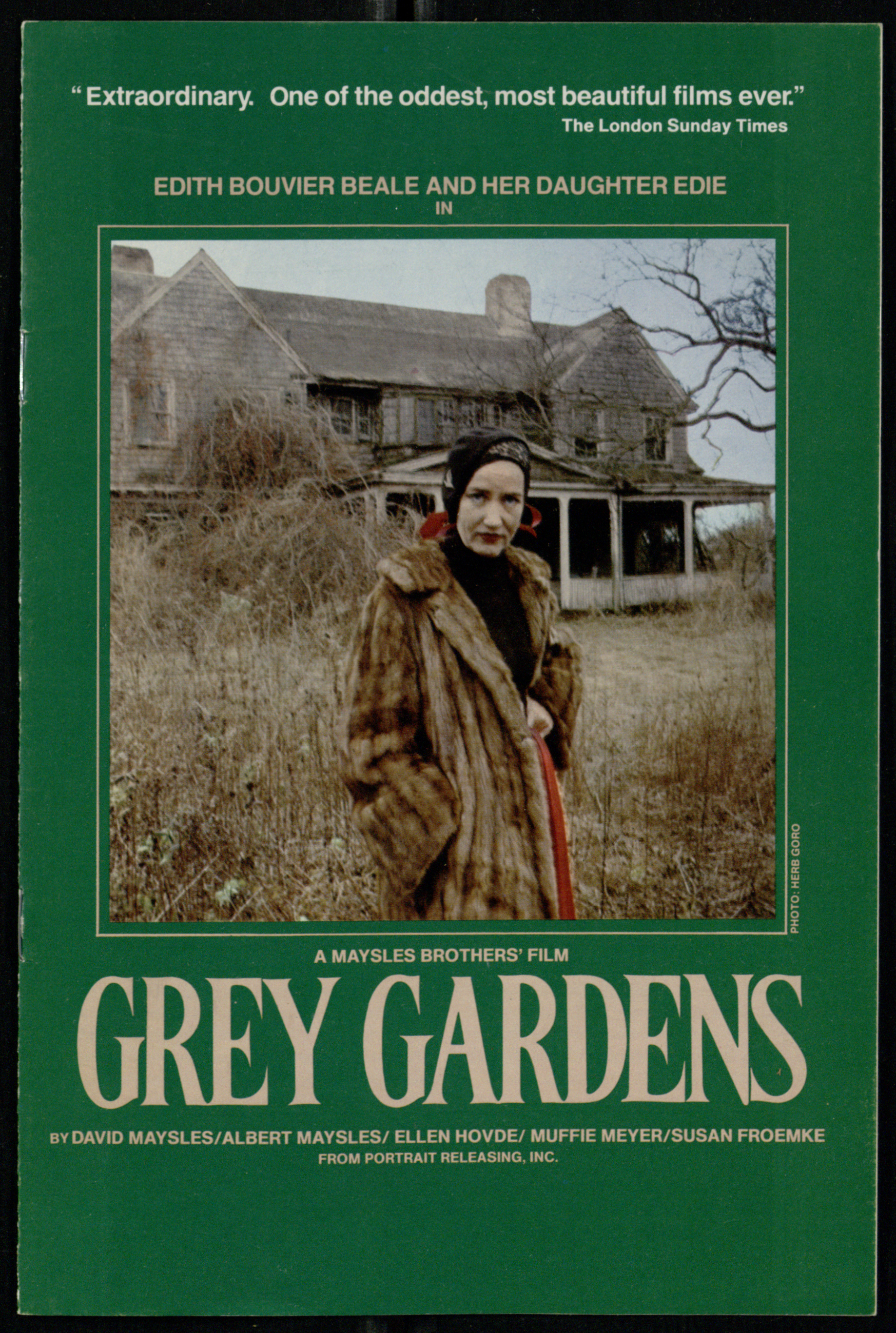
Grey Gardens publicity brochure

Nearly 40 years on, Albert and David Maysles’ Grey Gardens remains a stunning achievement. After a decade of successes, including Salesman (1968) and Gimme Shelter (1970), the Maysles turned their camera toward another fascinating subject. The film chronicles the lives of Edith and Little Edie Beale in their crumbling Gold Coast mansion, while they sing and dance about the years gone by and their status as outsiders from a once wonderful socialite existence.

The film still raises the same questions about the methods of documentary filmmaking and the possibility of exploitation, which is a good thing. Certain documentaries should make us aware not only of the subject, but of the filmmakers as well. We should question the motives of the men and women holding the cameras, and a good documentary should start a conversation rather than finish it. Both David and Albert always contended that their film was a truthful portrait of the women. Although the Beale’s behavior is troubling at times, it is also exuberant and powerful. That they were relatives of Jacqueline Kennedy Onassis gave the story some initial tabloid appeal, but when you strip away this back-story to focus solely on the women, we instead see them as fascinating subjects, and human beings, not just tabloid fodder. That their personalities are a little eccentric is certain, that the Maysles took advantage is less so. One object that is not in the gallery below is a letter of condolence from Little Edie to Judith Maysles after David’s untimely death. Years later, she still remembered him as a kind man, and if you listen closely to their interactions throughout the film, you can see that this was a loving portrait of two beautiful, if odd, women. Continue reading At the Archive: The David Maysles Collection at HGARC
Anna Julia Cooper’s A Voice from the South, By a Black Woman from the South

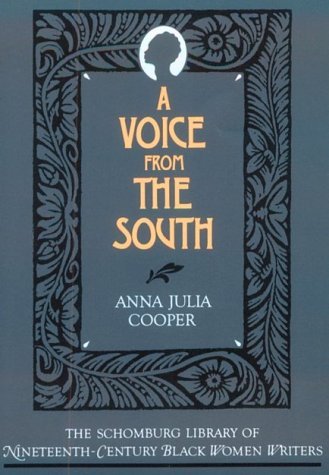
Voice from the SouthAnna Julia Cooper’s A Voice from the South, By a Black Woman from the South

Deconstruction of the White Aesthetic Gaze

Historically, African Americans have viewed the literary canon as a space for resistance, and for the expression of political thoughts on racial uplift.  Within the contours of language, black writers and intellectuals have established a foundation of social influence. Although traditionally silenced and obscured in academia and the literary sphere, the voices of black women, and particularly 19th century women writers, signify the locus of this African American literary tradition. One of the monumental writers of the era was Anna Julia Cooper, a “self-made woman born into slavery,” devoted educator, spokesperson and the fourth black woman to earn a PhD. [1] Cooper published a number of commendable works; however, the most laudable is A Voice from the South, By a Black Woman from the South.[2] Published in 1892, this collection of essays and speeches is revered as an “unparalleled articulation of black feminist thought.”[3] Cooper cultivates a language that interrogates pressing issues of the 19th century such as racial uplift and womanhood.  In the text, Cooper emphasizes that, “Only if the black woman can say “when and where I enter, in the quiet, undisputed dignity of my womanhood, without violence and without suing or special patronage, then and there the whole Negro race enters with me.”[4] In this illuminating declaration, she asserts that the progress of African Americans is impossible without black women. Cooper also advances in A Voice from the South, that black women are not only the gatekeepers of not only the black community, but modern American civilization. Continue reading Anna Julia Cooper’s A Voice from the South, By a Black Woman from the South

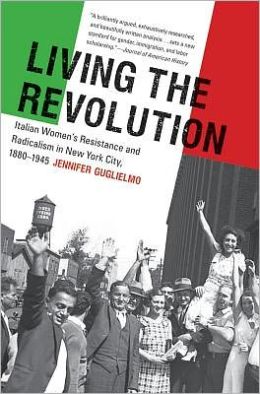
Living the Revolution: Italian Women’s Resistance and Radicalism in New York City, 1880-1945

Living the RevolutionGuglielmo, Jennifer.  Living the Revolution:Italian Women’s Resistance and Radicalism in New York City, 1880-1945.  Chapel Hill:  The University of North Carolina Press, 2010.

Jennifer Guglielmo subverts the stereotype of the domestic Italian immigrant woman with her study of multiple generations of feminine political activism for the working class in Living the Revolution:  Italian Women’s Resistance and Radicalism in New York City, 1880-1945. [1]  In her book, she gives voice to the thousands of women who immigrated from Italy to America in the late nineteenth and early twentieth century, particularly those who engaged in anarchist movements and labor organization. Guglielmo demonstrates how the mass exodus of Italian men forced Italian women to learn strategies of community and political involvement far beyond the domestic sphere, and that these women brought those skills with them to the United States and passed them on to their daughters and coworkers. Using oral histories, state and federal legal documents, and public and private archives, Guglielmo offers compelling biographical histories of some of the women involved in radical politics at the turn of the twentieth century.  Guglielmo illustrates how the identity of Italian-American women was influenced by constant tension between the family and the community, the racialization of Italians and the quest for American assimilation. Continue reading Living the Revolution: Italian Women’s Resistance and Radicalism in New York City, 1880-1945

A Word From Our Sponsor: Admen, Advertising, and the Golden Age of Radio.

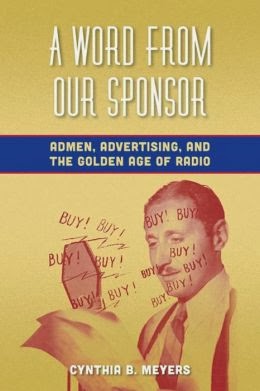
A Word from our SponsorA Word From Our Sponsor: Admen, Advertising, and the Golden Age of Radio. By Cynthia B. Meyers, Fordham University Press, New York, 2014, 391 pages.

We all know advertising pays for much of our popular media.  Anyone in danger of forgetting this crucial fact is sure to be reminded by the television industry’s increasingly desperate efforts to make sure people are watching – and paying attention to – commercials.  Expanding video on demand services attempt to protect advertising revenues by allowing audiences to timeshift their viewing as they would with a DVR, while inserting up-to-date advertisements into commercial breaks and preventing fast-forwarding.  YouTube, once the great hope for alternative user-generated content, features increasingly intrusive ads that bookend and overlay videos.  Other supposedly new and innovative techniques, such as product placement and sponsored programs built around a specific product, hearken back to older advertising methods like those described in Cynthia Meyers’ fascinating new book, A Word From Our Sponsor: Admen, Advertising, and the Golden Age of Radio.  Meyers draws on extensive archival research to fill a hole in recent scholarship, outlining the intimate and complicated relationships between broadcasters and commercial interests from the point of view of the admen who were responsible for much of the program that constitutes radio’s golden age.  Throughout, Meyers demonstrates that commercialism was not “an outside force silencing the voice of the people but…a set of beliefs, practices, and economic incentives that not only created dominant institutions but also helped build authentic popular cultural forms” (5). Continue reading A Word From Our Sponsor: Admen, Advertising, and the Golden Age of Radio.

Our Nixon: An Interview with Director Penny Lane

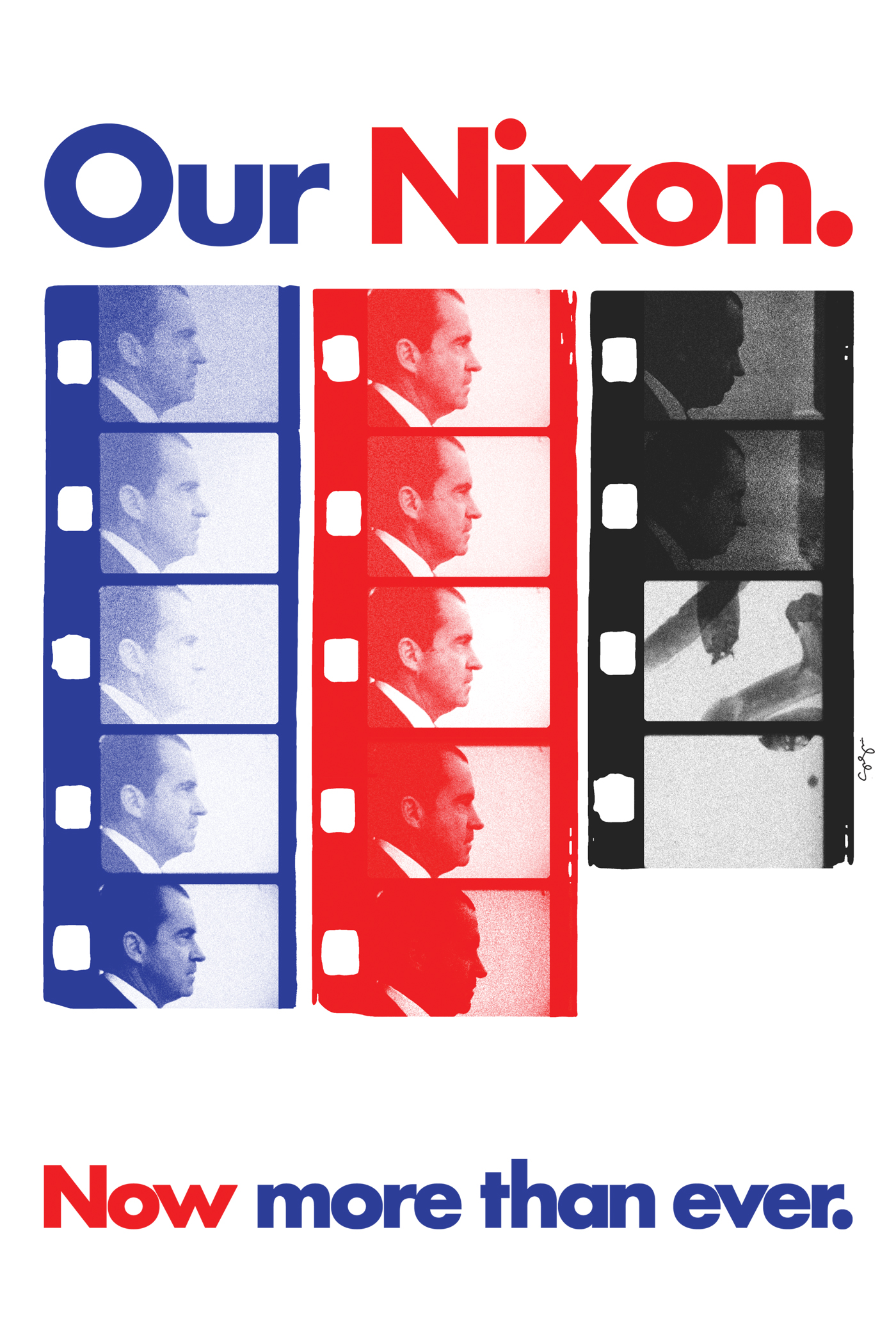
Our Nixon PosterOur Nixon, the latest film from director Penny Lane, attempts to shed light on a story that we all think we know, that of the Richard Nixon presidency, and the Watergate scandal that eventually led to his resignation. The “our” in this case, is not the American public, as President Nixon’s legacy and public image is still a complicated one, to say the least. Rather, here, the “our” is comprised of chief of staff Bob Haldeman, special assistant Dwight Chapin, and domestic affairs adviser John Ehrlichman. These men faced intense scrutiny during the Watergate scandal and trial, and spent time in federal prison for their involvement and perjury. But they also had a great time before that fateful event, as they traveled the world with President Nixon, taking hours of Super 8 footage that was summarily gathered by investigators as evidence and locked away for decades.

Lane rescues this footage and puts it to good use. Pairing it with the audio of the White House tapes and other interviews, she paints a picture of three men who would do anything for their president, and whose loyalty ultimately cost them their jobs and tarnished our image of the office. It is fascinating to think of these issues as we watch them make their way around the world, spend time lounging in the sun, or witness president Nixon’s conversation with Neil Armstrong after he sets foot on the moon. But add to this a healthy dose of Nixon’s famous paranoia and diatribes against those against him, and you have an interesting story to tell. While it does not necessarily transform our understanding of those years, it does help to expand our collective memory, by using the filmed memories of those closest to the president himself.

Our Nixon recently arrived on DVD, and I interviewed director Penny Lane about obtaining the original footage, the process of creating a dialogue with the men without being able to actually interview them, and how her perspective on Nixon changed with the project.

-Rob Ribera Continue reading Our Nixon: An Interview with Director Penny Lane