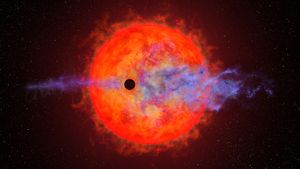
The central question that my research stems from is simple: What makes a world habitable?
Background and Motivation
By the conventional definition, habitable worlds are rocky planetary bodies that orbit close enough to their host star to sustain the presence of liquid water on their surfaces. However, from examining our own solar system as well as exoplanetary systems, it is clear that many worlds within this so-called “Habitable Zone” (HZ) lack a critical component of habitability — an atmosphere.
Neither Mercury nor Mars (located within the solar HZ) possesses a thick atmosphere. Numerical modeling studies have demonstrated that the stellar wind may have depleted the atmospheres of Proxima b and the inner planets of the TRAPPIST-1 system [1, 2]. These predictions have been supported by recent observations by the James Webb Space Telescope, which indicate that neither TRAPPIST-1b nor TRAPPIST-1c possesses a thick CO2 atmosphere [3, 4] and that other rocky exoplanets previously thought to be candidates for habitability are similarly devoid of thick atmospheres (e.g. [5]).
These striking discoveries motivate rigorous investigation of how rocky exoplanets can become airless. As planetary systems evolve over time, a planetary body may lose its atmosphere in the process of nonthermal atmospheric escape, thereby drastically altering its ability to host life. Nonthermal atmospheric escape is largely fueled by the stellar wind eroding gas in planetary upper atmospheres [6, 7]. The stellar wind is a high-velocity stream of charged particles originating from stars, flowing along stellar magnetic field lines and interacting with nearby planets. This outflow peaks during stellar energetic events such as coronal mass ejections and stellar flares, which can lead to higher rates of atmospheric loss. In addition to stellar activity, myriad other factors within a planetary system can influence the rate at which atmospheric ions experience nonthermal escape; however, these effects are not yet well documented or well understood.
Previous works have identified subsets of exoplanets as candidates for atmospheric characterization by JWST and by related missions [8] [9] [10]. These frameworks broadly define habitable worlds as rocky exoplanets residing within the HZ. In light of recent observational and numerical modeling results indicating the prevalence of airless rocky exoplanets, it is worthwhile to develop more strict criteria to assess whether a supposedly habitable exoplanet can indeed host an atmosphere. To this end, the planetary system parameters regulating atmospheric escape will be crucial to investigate and bear in mind during future selections of this nature.
My Research

My work seeks to investigate these parameters — including planetary radius, atmospheric composition, and planetary magnetic field — in conjunction with stellar activity to elucidate connections with atmospheric loss. To accomplish this goal, I use the BATS-R-US MS-MHD code [11, 12] to simulate atmospheric ion escape from rocky exoplanets.
My recent paper, Role of Planetary Radius on Atmospheric Escape of Rocky Exoplanets [13] (featured in AAS Nova), examines the connection between rocky planet radius and atmospheric loss. We uncovered a novel non-monotonic trend, in which escape rates peak at a maximum value for a planet approximately 70% the size of Earth.
My current research project examines how the interior composition of a rocky exoplanet affects the rate of atmospheric loss. In particular, I am interested in a phenomenon called the core induction effect, which allows rocky worlds with large conducting cores, such as Mercury, to produce additional magnetic shielding in response to extreme stellar weathering. In an exoplanet context, we posit that the core induction effect could allow so-called super-Mercury exoplanets to better protect their atmospheres. This work is ongoing and has been presented at select scientific meetings, including AGU24.
Sources
[1] Dong, C., Jin, M., Lingam, M., Airapetian, V. S., Ma, Y., & van der Holst, B. (2018). Atmospheric escape from the TRAPPIST-1 planets and implications for habitability. Proc. Natl. Acad. Sci., 115 (2), 260–265. https://doi.org/10.1073/pnas.1708010115
[2] Dong, C., Lingam, M., Ma, Y., & Cohen, O. (2017). Is Proxima Centauri b Habitable? A Study of Atmospheric Loss. Astrophys. J. Lett., 837(2), Article L26, L26. https: //doi.org/10.3847/2041-8213/aa6438
[3] Greene, T. P., Bell, T. J., Ducrot, E., Dyrek, A., Lagage, P.-O., & Fortney, J. J. (2023). Thermal emission from the Earth-sized exoplanet TRAPPIST-1 b using JWST. Nature, 618(7963), 39–42. https://doi.org/10.1038/s41586-023-05951-7
[4] Zieba, S., Kreidberg, L., Ducrot, E., Gillon, M., Morley, C., Schaefer, L., Tamburo, P., Koll, D. D. B., Lyu, X., Acuña, L., Agol, E., Iyer, A. R., Hu, R., Lincowski, A. P., Meadows, V. S., Selsis, F., Bolmont, E., Mandell, A. M., & Suissa, G. (2023). No thick carbon dioxide atmosphere on the rocky exoplanet TRAPPIST-1 c. Nature, 620(7975), 746– 749. https://doi.org/10.1038/s41586-023-06232-z
[5] Lustig-Yaeger, J., Fu, G., May, E. M., Ceballos, K. N. O., Moran, S. E., Peacock, S., Steven- son, K. B., Kirk, J., López-Morales, M., MacDonald, R. J., Mayorga, L. C., Sing, D. K., Sotzen, K. S., Valenti, J. A., Redai, J. I. A., Alam, M. K., Batalha, N. E., Ben- nett, K. A., Gonzalez-Quiles, J., . . . Wakeford, H. R. (2023). A JWST transmission spectrum of the nearby Earth-sized exoplanet LHS 475 b. Nat. Astron., 7, 1317–1328. https://doi.org/10.1038/s41550-023-02064-z
[6] Airapetian, V. S., Barnes, R., Cohen, O., Collinson, G. A., Danchi, W. C., Dong, C. F., Del Genio, A. D., France, K., Garcia-Sage, K., Glocer, A., Gopalswamy, N., Grenfell, J. L., Gronoff, G., Güdel, M., Herbst, K., Henning, W. G., Jackman, C. H., Jin, M., Johnstone, C. P., . . . Yamashiki, Y. (2020). Impact of space weather on climate and habitability of terrestrial-type exoplanets. Int. J. Astrobiol., 19(2), 136–194. https: //doi.org/10.1017/S1473550419000132
[7] Gronoff, G., Arras, P., Baraka, S., Bell, J. M., Cessateur, G., Cohen, O., Curry, S. M., Drake, J. J., Elrod, M., Erwin, J., Garcia-Sage, K., Garraffo, C., Glocer, A., Heavens, N. G., Lovato, K., Maggiolo, R., Parkinson, C. D., Simon Wedlund, C., Weimer, D. R., & Moore, W. B. (2020). Atmospheric Escape Processes and Planetary Atmospheric Evolution. J. Geophys. Res. Space Phys., 125 (8), Article e27639, e27639. https://doi. org/10.1029/2019JA027639
[8] Charnay, B., Mendonça, J. M., Kreidberg, L., Cowan, N. B., Taylor, J., Bell, T. J., Deman- geon, O., Edwards, B., Haswell, C. A., Morello, G., Mugnai, L. V., Pascale, E., Tinetti, G., Tremblin, P., & Zellem, R. T. (2022). A survey of exoplanet phase curves with Ariel. Exp. Astron., 53(2), 417–446. https://doi.org/10.1007/s10686-021-09715-x
[9] Deming, D., Seager, S., Winn, J., Miller-Ricci, E., Clampin, M., Lindler, D., Greene, T., Charbonneau, D., Laughlin, G., Ricker, G., Latham, D., & Ennico, K. (2009). Dis- covery and Characterization of Transiting Super Earths Using an All-Sky Transit Survey and Follow-up by the James Webb Space Telescope. Publ. Astron. Soc. Pac., 121(883), 952. https://doi.org/10.1086/605913
[10] Kempton, E. M., Bean, J. L., Louie, D. R., Deming, D., Koll, D. D. B., Mansfield, M., Christiansen, J. L., López-Morales, M., Swain, M. R., Zellem, R. T., Ballard, S., Bar- clay, T., Barstow, J. K., Batalha, N. E., Beatty, T. G., Berta-Thompson, Z., Birkby, J., Buchhave, L. A., Charbonneau, D., … von Essen, C. (2018). A Framework for Prioritizing the TESS Planetary Candidates Most Amenable to Atmospheric Charac- terization. Publ. Astron. Soc. Pac., 130 (993), 114401. https://doi.org/10.1088/1538- 3873/aadf6f
[11] Powell, K. G., Roe, P., Linde, T., Gombosi, T., & De Zeeuw, D. L. (1999). A solution- adaptive upwind scheme for ideal magnetohydrodynamics. J. Comput. Phys., 154 (2), 284–309. https://doi.org/10.1006/jcph.1999.6299
[12] Tóth, G., van der Holst, B., Sokolov, I. V., De Zeeuw, D. L., Gombosi, T. I., Fang, F., Manchester, W. B., Meng, X., Najib, D., Powell, K. G., Stout, Q. F., Glocer, A., Ma, Y.-J., & Opher, M. (2012). Adaptive numerical algorithms in space weather modeling. J. Comput. Phys., 231(3), 870–903. https://doi.org/10.1016/j.jcp.2011.02.006
[13] Chin, L., Dong, C., & Lingam, M. (2024). Role of Planetary Radius on Atmospheric Escape of Rocky Exoplanets. Astrophys. J. Lett., 963(1), L20. https://doi.org/10.3847/2041-8213/ad27d8