Famed Parisian bookseller and BU alum George Whitman dies

v_2054945185_581e50400b_o

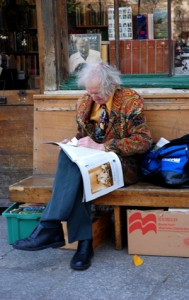
George Whitman reads outside his Shakespeare and Co. bookstore in 2007. Photos by Jim Donnelly and Ard van der Leeuw

CFA salutes George Whitman (COM’35, SMG’35), who died at 98 shortly before Christmas, founded Shakespeare and Company, a harbor for any writer from expatriate celebrities to drug-addled wannabes, in 1951. Bracketed by the Seine and Notre-Dame, the store, named after the French bookshop that was the Jazz Age haunt of Hemingway and Fitzgerald, attracted its own literary glitterati for readings and book signings, among them Nin, Henry Miller, James Baldwin, Samuel Beckett, William Burroughs, and Allen Ginsberg.

His generosity and kindness will be remembered by his family, countless friends, writers, fellow bibliophiles and anyone lucky enough to meet him.

Our sympathy to the Whitman  family.

Sylvia Beach Whitman, George’s daughter, will continue to run the shop.

Photo and some content from BU Today.

BU Virtual Concert Hall Launched!

Arnold Schoenberg: A Survivor from Warsaw from BU School of Music on Vimeo.

I am pleased to announce the launch of our newest web initiative, BU's Virtual Concert Hall.

We have decided to coincide the launch with the release of the video production of our most recent concert at Symphony Hall, which featured a great pre-concert talk by STH/SOM faculty member Andrew Shenton, Schoenberg's A Survivor from Warsaw conducted by David Hoose and narrated by Frank Kelley, as well as Verdi's Messa da Requiem which was conducted by Ann Howard Jones and featured our renowned alumni soloists Michelle Johnson, soprano, Daveda Karanas, mezzo-soprano, Clay Hilley, tenor, and Morris Robinson, bass.

As new projects come up, they will be featured in this area, and projects will be continually archived under the Concert Archive section.

The concert was recorded in 5.1 surround sound and full HD video.

Dean Juárez Speaks Out on Arts Budget Cuts

By the numbers:

$1.68 = One grande coffee.

$1.46 =  Amount of yearly U.S. (state and federal) arts funding per person.

In a recent letter to the editor published in The Chronicle of Higher Education, Benjamín Juárez, Dean of the College of Fine Arts, explains how arts infrastructure is being “dismantled” by shrinking state and federal funds for the arts and arts education.

In the video below, Dean Juárez discusses the current state of arts funding and what schools and communities can do to help keep the arts an integral part of children’s lives and development in the 21st century.

Governor Scott’s Shortsighted Proposal

Dr. Michael M. Crow. ASU image.

Dr. Michael M. Crow. ASU image.

Florida Governor Rick Scott (R) has proposed reducing state aid to educational programs that are not in the fields of science, technology, engineering or math.

This is a bad idea.

I support Michael Crow's (president, Arizona State University) position that our graduates must have the "ability to understand the complexity and interrelatedness of our cultural, economic, natural, political, social, and technological systems."

We cannot predict precisely what jobs will exist in the future.  Our educational objectives should therefore be aimed at the person, not a particular job market.  Only in this way can we prepare graduates for a future we cannot see.

I welcome your thoughts.

Dr. Crow's statement from Salon.com:

Last week, Florida Gov. Rick Scott called for reductions in state appropriations for particular academic disciplines so that public universities can focus resources on producing graduates in the STEM fields—science, technology, engineering, and math. This shift, he claims, would better serve the state by spurring job creation. For some reason, he seemed especially concerned that Florida universities might be producing too many anthropologists. He was quoted as saying: “We don’t need a lot more anthropologists in the state. … I want to spend our dollars giving people science, technology, engineering, and math degrees. That’s what our kids need to focus all their time and attention on, those types of degrees, so when they get out of school, they can get a job.”

At the end of the day, the objective of our universities, both public and private, should be to create teaching, learning, and discovery environments capable of producing learners of the highest caliber. Differentiated learning platforms must accommodate the immense variability in types of intelligence and creativity that have made the United States the dominant source of innovation worldwide. Within this context, it is critically important that students develop the ability to move from subject to subject and problem to problem, and from environment to environment and opportunity to opportunity, in ways that unleash and utilize their innate capacities and creative potential. Such mental agility will allow them to establish new business enterprises, scientific or technological capabilities, social initiatives, and creative endeavors in every sector of the economy. It may come as a surprise to Gov. Scott, but the perpetual innovation that drives our economy could even be inspired by anthropologists.

The objective of public universities should not be to produce predetermined numbers of particular types of majors but, rather, to focus on how to produce individuals who are capable of learning anything over the course of their lifetimes. Every college student should acquire thorough literacy in science and technology as well as the humanities and social sciences. Every student should have an understanding of complexity and sustainability and decision-making matched with a general awareness of entrepreneurship and business. From this breadth of experience, students gain the perspective and focus necessary to succeed in any academic field and subsequent career trajectory. Given the multiple dimensions and global interconnectedness of many professional sectors, the trend toward choosing two or even three majors is entirely appropriate. Needless to say, the challenge is to design universities that have the capacity to produce such individuals who are also ready to work within the contexts of initially narrower assignments.

Sarita Lilly in Porgy and Bess

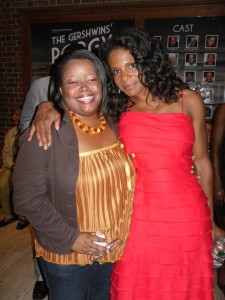
I am proud of our DMA student, Sarita Lilly, who performed as a resident of Catfish Row in The Gershwin's Porgy and Bess at the American Repertory Theatre (Aug. 17--Oct. 2).  The production moves to Broadway in January 2012.  During her time in the DMA-Voice program, Sarita has held a number of positions in the CFA Dean's Office and at the Tanglewood Institute.

Sarita with Audra MacDonald who played Bess.

Sarita with Audra McDonald (Bess).

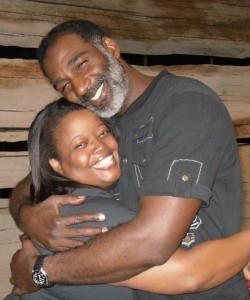
Sarita Lilly with Norm Lewis

Sarita with Norm Lewis (Porgy).

Candide!

B4gyWcmmyA9Q_NZUn-f1YxvAJ7Q3qtz-2JVX4LRrsrvKG0uDgDHrfWCwkjwHlKkSoLQXasZK7PwIEn0zj8tSFNlVKDF90RbCC5yTbIn0vM6h4A Think of the talent that has brought us the current musical production of Candide, beginning with Voltaire, and then Richard Wilbur, Leonard Bernstein, Stephen Sondheim, Lillian Hellman, John Latouche and Dorothy Parker.  Add to this group, the direction of Mary Zimmerman and the marvelous company and crew and you have one of the best musical productions I have seen in a long time.   Please go.

I am aware that musicals cost more to produce but I hope the Huntington will continue to do them as this was a real success.  Mary Zimmerman's direction added a zesty physicality just as she did for Lucia Di Lammermoor, which she directed at the Metropolitan Opera.

BU Theatre

September 10 -- October 16

Huntington Theatre Company

Philadelphia Orchestra Money Woes Require Shared Leadership, Not Demands

Musicians must take responsibility for the future of the Orchestra and not simply make demands. They should assume a leadership role and not blame outcomes on management.  Many things are at stake in Philadelphia.

Orchestra at a Juncture (from Philly.com)

Now five months old, the Philadelphia Orchestra Association's bankruptcy case has come to a critical fork in the road.

Wednesday's hearing before Judge Eric L. Frank was a subdued affair, with only a few lawyers present and no orchestra players or staff, but it was important for laying out two possible imminent paths - a quick resolution or a long, acrimonious battle that could stretch on for some time and have tragic consequences for the orchestra.

Read more...

Keyword: VIOLENCE

Artist: Joaquín

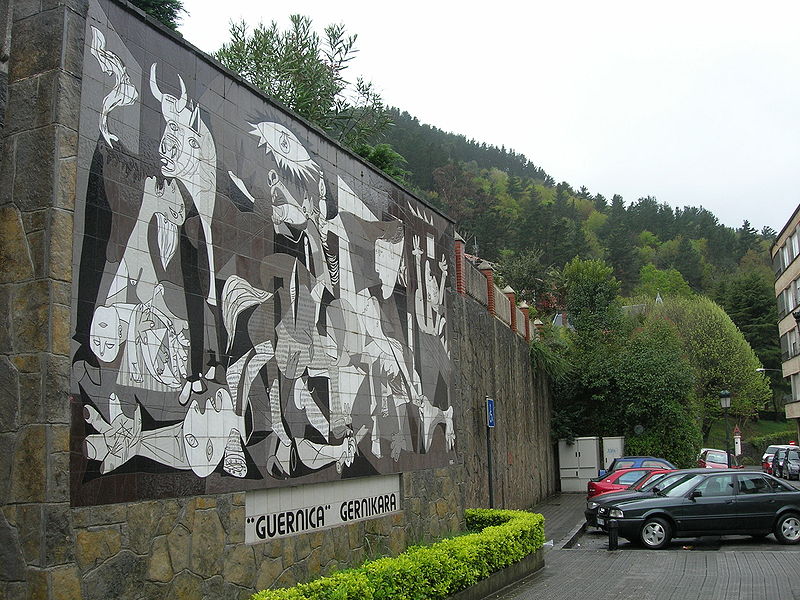
Reproduction of Picasso's Guernica. Artist: Joaquín. Location: Madrid, Spain

Violence, a Keyword for Interdisciplinary Collaboration

Our lives begin to end the day we become silent about things that matter.
Martin Luther King, Jr. '55  '59 (Hon)

I invite our community: CFA faculty, students, alumni and friends, as well as the greater Boston University community to participate in a year of creative discussion and action on the concept of violence. Every layer of society is touched by violence.  It weaves through the individual and into family and culture, threading its way through war and sports, medicine and politics, constantly fueled by a voracious news media, and via this overload finds its way back to the individual again. Violence – “horrible and heroic, disgusting and exciting, the most condemned and glorified of human acts” (R. Collins) - is one of the world’s most complex problems, and finding solutions requires a holistic, interdisciplinary approach.

The participation we seek may come in the form of attending or hosting activities related to performances or exhibits that comment on different aspects of violence. We are fortunate to work within a University that includes most disciplines; an enriching, plural dialogue can be developed.  A successful example is Visions and Voices: The USC Arts + Humanities Initiative.  This program focuses on the vibrant community of Los Angeles as an extended campus of the University of Southern California. We aim to go further by utilizing the wealth of resources available in our diverse community to explore solutions to a devastating societal issue.

Our goal is to build a two way street between text and context, in order to develop paths through conflict and obsession to resolution and stability.  In choosing to develop a year of programming on the keyword of violence, the College of Fine Arts is taking our School of Theatre’s lead, which will consider violence in drama, from Shakespeare to Masked, a look at the Palestinian Intifada, and Execution of Justice, a play about the murders of Supervisor Harvey Milk and Mayor George Moscone of San Francisco.  The other Schools have already begun programming, with the School of Visual Arts welcoming Enrique Chagoya, head of the painting program at Stanford University, whose recent work denouncing the abuse of children at the hands of priests met with a violent response from one viewer, and the School of Music choosing to present works written in times of violence, such as the French, Mexican and Bolshevik Revolutions, as well as the Second World War.

This initiative welcomes participation by our own students, and faculty, as well as commission and presentation of works from alumni and other members of the community.  Our friends at the Boston Symphony Orchestra, the School of the Museum of Fine Arts and the Huntington Theatre Company will present exhibits, plays and concerts that invite discussion on our keyword.

‘Perspective’ is an important word in this discussion, as no piece of art, no matter how forceful, reflective or coherent, can offer final answers – it can only provoke discussion by presenting one perspective on a multifaceted issue.  As John F. Kennedy said, “We must never forget that art is not a form of propaganda; it is a form of truth.”

BU alumna Nancy Livingston and her husband Fred Levin, have made a generous gift that will help the yearly development of this initiative.  We eagerly invite your diverse perspectives on this issue, and welcome all suggestions and feedback as an integral part of the collaborative process.  In developing opportunities for cultural participation across the BU campuses and beyond, the College of Fine Arts looks forward to creating new space for the arts within our community and defining a new role for itself within the University.

Benjamín E. Juárez
Dean
College of Fine Arts
Meanwhile at the Centre Pompidou…

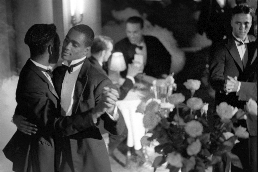
Photo Still by Sunil Gupta from the film, Looking for Langston

Photo Still by Sunil Gupta from the film, Looking for Langston

I also saw the show, Paris-Delhi-Bombay...which asks "what is India today?"

The work of over 50 artists from India and France seeks to cover six aspects of Indian society: politics, religion, the home, arts and crafts, town planning and the environment, and identity.  Although it is the largest democracy in the world and an economic power, India remains a mystery to many in France and this show is an effort to begin a conversation between the two cultures.  The work of Sunil Gupta, perhaps India's best known photographer, was included (image above).

The exhibit demonstrates how open the French are to other cultures, while also showing those cultures in a somewhat idealized state.  As often happens, the depiction of another culture no matter how well intended, cannot entirely escape its own cultural assumptions.

Kapoor in Paris

Anish Kapoor's Work Shown at the Grand Palais, Paris Ecole Nationale, and Galerie Kamel Mennour

Photo: Arrestedmotion.com

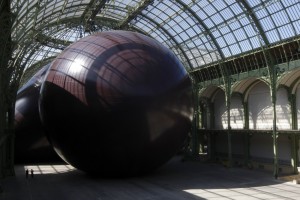
Leviathon Photo: Arrestedmotion.com

"Swallowed by the Monster"

While in Paris, I saw Anish Kapoor's work in three locations in Paris. As part of the Monumenta Programme, Amish's Leviathon was at the Grand Palais (pictured above).  To walk inside his gargantuan Leviathon is to submit, to become a Jonah.

In the chapel of the the Beaux-arts de Paris L'ecole nationale superieure, Kapoor mounted a series of cement sculptures -- tall, grey and hallowed out. Kapoor's work is a kind of "proto-architecture, ...of edifaces from the dawn of humanity."

While at the Kamel Mennour Galerie, a one-man exhibit Almost Nothing, showed Kapoor's work "based on the idea of the void and immateriality."

Kapoor's pieces trick our perceptions in illuminating and delightful ways.

From The Guardian:

What Kapoor has created he's called Leviathan, a 35-metre tall work – inflated, it's 13,500 square metres .

Visitors first of all walk inside it, like going into the belly of a whale or a cathedral with three chambers veering off it. Then outside you see what it actually is – four connected balloon-type structures. Something from a science fiction film, perhaps, that's taken refuge in this grand 19th-century glass building by the Seine.

Kapoor has dedicated Leviathon to Ai Weiwei, a dissident Chinese artist who has not been heard from  for the past month.  Kapoor wants all museums and galleries to close for one day in protest of Weiwi's possible mistreatment by authorities.