
By Michelle Van Sleet
Introduction.
Throughout the world, Nikita Khrushchev’s leadership in the Soviet Union from 1955-1964 is remembered as a period of “thaw” during the Cold War. Khrushchev’s foreign policy of pursuing a peaceful coexistence with the United States and its allies was a dramatic change from previous Soviet leaders’ attitudes. In 1956, after Khrushchev had succeeded Joseph Stalin and was beginning to consolidate power, Khrushchev began a process of “de-Stalinization” to weaken his enemies in the Communist Party and strengthen his position as Premier. Shortly after this, Khrushchev continued to change the Party’s line with his shift in approach to foreign policy. This policy of a peaceful coexistence was meant to improve relations between the Soviet Union and the United State and had major implications for the events of the Cold War. Khrushchev’s policy marks a drastic change in Soviet policy and therefore, it is necessary to understand its effects domestically and abroad.
I am analyzing the period from 1956 to 1964. During this time, Khrushchev implemented his policy of peaceful coexistence, but seemed to deviate from it during a number of flashpoints in history. My question is “to what extent did Khrushchev’s foreign policy for a peaceful coexistence alter the Soviet people’s perception of Soviet-American relations?” There is debate among historians as to the extent to which Khrushchev’s foreign policies were the cause of his downfall and eventual cessation of Soviet leadership. Many argue that his failed domestic policies were more significant than his foreign policies. One of my main sources is from Khrushchev himself; it is his article titled, “On peaceful Coexistence” that justifies his policy of peaceful coexistence and explains the reasons for its implementation. Another major source will be from Rósa Magnúsdóttir’s article “‘Be Careful in America, Premier Khrushchev!’: Soviet Perceptions of Peaceful Coexistence with the United States in 1959”, which analyzes Soviet letters during this time frame. The letters are written by Soviet civilians addressing Khrushchev’s policy. Overall, I will attempt to determine the effect of Khrushchev’s peaceful coexistence policy on his role as the leader of the Soviet Union.
Introductory Information.
Khrushchev, Nikita. “On peaceful coexistence.” foreign affairs 38, no. 1 (1959): 1-18. http://www.jstor.org/stable/20029395 (accessed April 1, 2013).
- This article was written by Nikita Khrushchev himself, explaining the reasons for his policy of peaceful coexistence. He argues that since the Lenin-era, the Soviet Union has always pursued this policy because it is in the nature of Communism and merely a natural extension of it. In this article, Khrushchev continually defends the superiority of Communism, arguing that it will eventually prevail, through peaceful revolution, in the Capitalist world. Khrushchev promises the further growth and strengthening of the Soviet economy, seeing it as the only logical product of a Communist system. Furthermore, Khrushchev cites his reduction in military and military bases as sufficient proof that his policy is legitimate and ends by saying, “peaceful coexistence is the only way which is in keeping with the interests of all nations.” This source is one of the most valuable, as it comes directly from Khrushchev himself, making his statements more ‘pure’ to analyze.
Kennan, George. “Peaceful Coexistence: A Western View.” Council on Foreign Relations 38, no. 2 (1960): 171-190. http://www.jstor.org/stable/20029411 (accessed April 1, 2013).
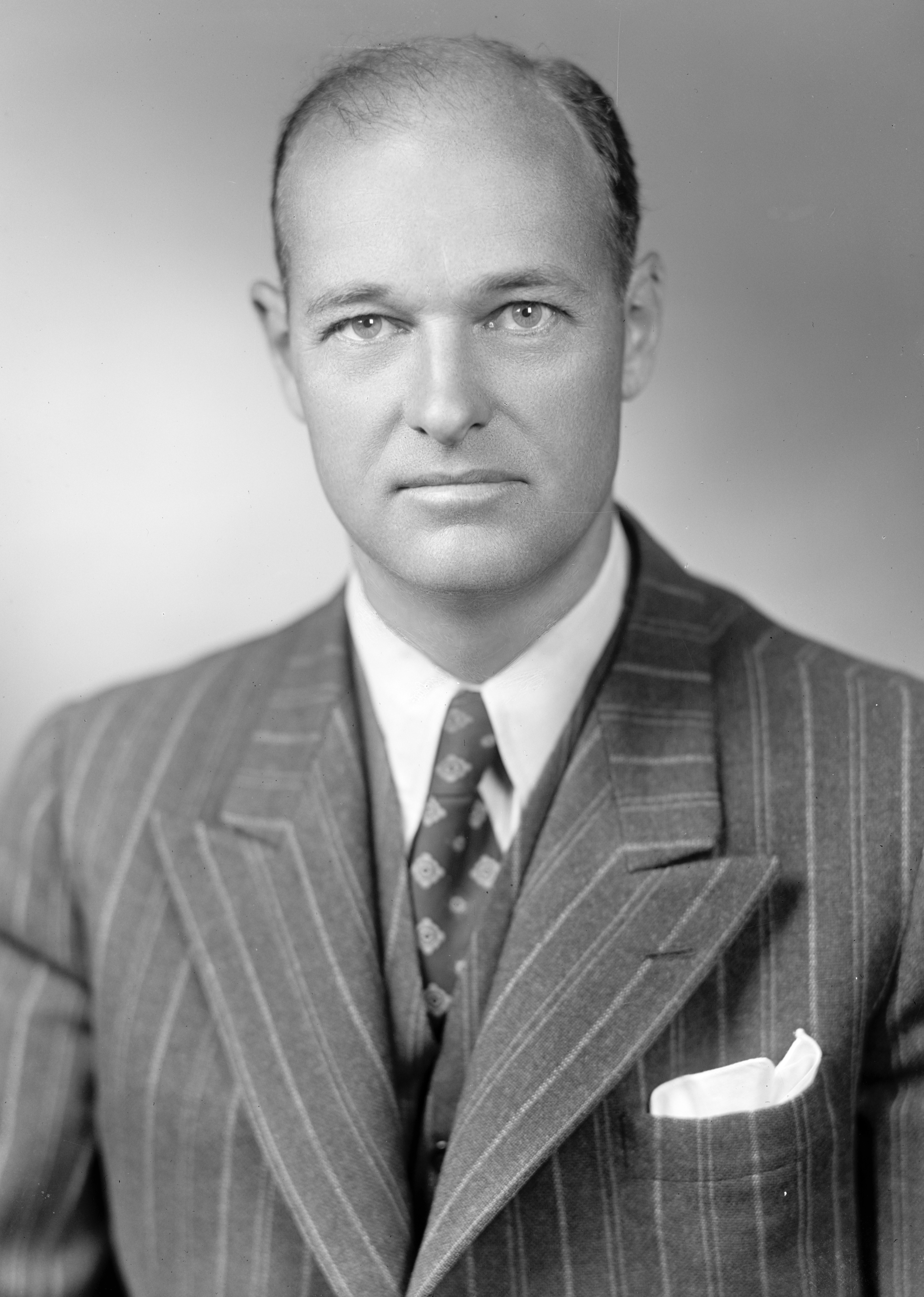
- This article was written by George Kennan, former U.S. Ambassador to the Soviet Union. It gives an account of the United States’ perspective of Khrushchev’s policy of peaceful coexistence. Kennan takes a negative and disapproving view, calling Khrushchev’s policy a “distortion” of history, as he fails to acknowledge the Lenin- and Stalin-era violence in the Soviet Union. Kennan’s opinion should not be taken lightly, as he was a valuable adviser to the U.S. government during this time frame; his article can be used to determine the general American perspective of Khrushchev’s policies.
Primary Sources.
Magnúsdóttir, Rósa. ““Be Careful in America, Premier Khrushchev!”: Soviet Perceptions of Peaceful Coexistence with the United States in 1959.” EHESS 47, no. 1/2 (2006): 109-130. http://www.jstor.org/stable/20174992 (accessed April 2, 2013).
- In her article, Rósa Magnúsdóttir analyzes a collection of letters from the Soviet public regarding their opinions about Khrushchev’s new policy of peaceful coexistence. The letters were written just after Khrushchev’s visit to the United States, which the Soviet citizens generally viewed very positively. First, Magnúsdóttir explains the nature of peaceful coexistence and its goals. Then, she describes how the letters’ writers typically highlight Communism’s superiority over Capitalism, but evoke an admiration for the American way of life. The Soviet authors seem to believe that their country’s intentions are misunderstood and that, in fact, Khrushchev is correct in claiming it is the nature of Communism to pursue peaceful coexistence. Overall, however, Magnúsdóttir argues that there is an overwhelming sense of “self-censorship” that goes on in the letters, which makes them severely susceptible to bias. This should always be kept in mind while reading this article because it may not accurately represent the Soviet peoples’ attitudes towards Khrushchev.
Wedgwood Benn , David. “On Re-Examining the Khrushchev Era: A Review Article Khrushchev: The Man and His Era by William Taubman.” Europe-Asia Studies 56, no. 4 (2004): 615-621. http://www.jstor.org/stable/4147389 (accessed April 5, 2013).
- This article briefly discusses the notion that although remembered fondly by many non-communists now, Khruschev was horribly unpopular during his time in power. Wedgewood Benn attributes this mass-disapproval to Khrushchev’s involvement in the Berlin Crisis of 1961 and the Cuban Missile Crisis. Both events were seen as being shameful for the Soviet Union. This would suggest that it was not precisely Khrushchev’s policy of peaceful coexistence that led to his downfall, but rather, his lack of will to follow his own policy and embarrass the Soviet Union in major international crisies.
Du Quenoy, Paul. “The Role of Foreign Affairs in the Fall of Nikita Khrushchev in October 1964.” The International History Review 25, no. 2 (2003): 334-356. http://www.jstor.org/stable/40109322 (accessed April 1, 2013).
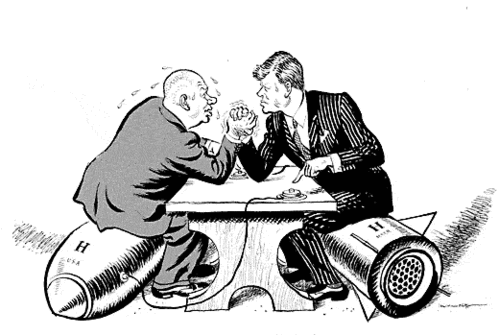
- In his article, Paul De Quenoy argues that Khrushchev’s foreign policy was a significant factor that led to his downfall in 1964. He notes the hypocrisy of Khrushchev’s policy; despite his calls for peace, Khrushchev did not substantially reduce the amount of nuclear weapons the Soviet Union possessed. Similarly to Wedgewood Benn, De Quenoy specifies the Berlin Crisis and Cuban Missile Crisis as points of contention between the Soviet people and the Communist party. Overall, he suggests the frequent flashpoints during Khrushchev’s reign that should be attributed towards his downfall.
Print Sources.
Service, Robert. A History of Modern Russia: From Tsarism to the Twenty-First Century. Third Edition ed. Cambridge, MA: Harvard University Press, 1997.
- The 17th and 18th Chapters of Service’s book is focused on the Khrushchev-era in the Soviet Union. He notes that Khrushchev’s claim of Lenin’s will to follow a peaceful coexistence in the beginning phase of Communism is not quite accurate. Instead, Service argues, “Lenin had mentioned such an idea only glancingly”. Furthermore, Service claims that Khrushchev “no longer faced serious domestic challenge” to his policy of peaceful coexistence, but instead offers other domestic conditions, such as politics, economics, and culture, for being the cause of his downfall. For Service, Khrushchev’s downfall was not a foreign policy issue, but a domestic one.
Kocho-Williams, Alastair. Russia’s International Relations in the Twentieth Century. Hoboken, NJ: Taylor and Francis, 2013.
- In his book, Kocho-Williams focuses on the Khrushchev-era in Chapter 8. He argues that Khrushchev’s policy of peaceful coexistence would be better defined as a policy of “enforced coexistence” rather than seeking to ease tensions. Again, Kocho-Williams cites the Berlin Crisis and the Cuban Missile Crisis as being major failures in Khrushchev’s policies. He argues that the series of embarrassments in the 1950s and 1960s were the main reasons why Khrushchev was ousted in 1964. Kocho-Williams highlights Khrushchev’s trip to the United States as a positive time in public opinion, but pinpoints the ‘Shoe Banging’ incident a massively damaging negative shift. Like De Quenoy and Wedgewood Benn, Kocho-Williams believes that it was not necessarily Khrushchev’s policy that the Soviet people disagreed with, but hi hypocrisy in following his policy and his poor handling of international relations made him an unpopular Premier.
Media and Background Sources.
“Khrushchev and Peaceful Coexistence” by John D. Clare
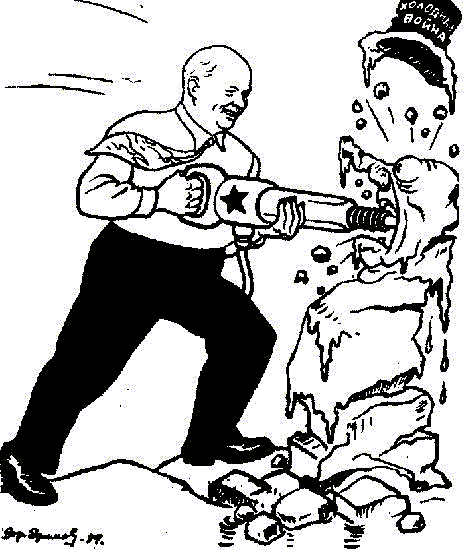
- Depicted is a cartoon of Khrushchev destroying a snow man, which represents the Cold War. A smiling, large and strong Khrushchev bravely begins to melt the snowman, putting an end to the Cold War. This is how the Soviet public viewed Khrushchev’s policy of peaceful coexistence in the beginning of his leadership; they were positive about his efforts and optimistic about their future relationship with the United States.
Khrushchev Threatens Hammarskjöld & UN 1960/10/3
- This is a video of Khrushchev’s ‘Shoe Banging’ incident at the UN in 1960 (starts at 4:45). This incident brought a lot of shame to the Soviet people, who felt their leader made a fool of himself on the world stage.This reflects the negative shift in public opinion that Khrushchev succumbed to during his leadership.
Khrushchev, Sergei. “Soviet Perspective on the Cuban Missile Crisis from Nikita Khrushchev’s Son.” United States Naval Institution, October 24, 2012.
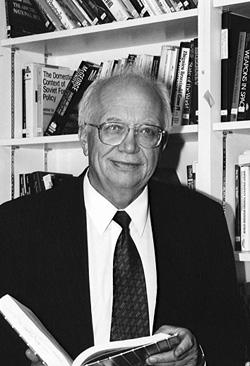
- This is an interview with Sergei Khrushchev, Nikita Khruschev’s son, about the Soviet perspective during the Cuban Missile Crisis. In the interview, Sergei defends his father’s actions and further promotes peaceful negotiations. This interview is rich in bias, as Sergei was the Premier’s son. Therefore, his opinion on the “Soviet Perspective” on certain Cold War issues differs to an unknown degree from the common Soviet people.
Brusilovskaia, Lidiia. 2009. “The Culture of Everyday Life During the Thaw.” Russian Studies In History 48, no. 1: 10-32. Academic Search Premier, EBSCOhost (accessed April 8, 2013).
- In her article, Brusilovskaia compares and contrasts the Soviet Union’s culture under Joseph Stalin, who led from 1922-1953, and Khrushchev. She also discusses the cult of personality period found under Stalin, which Khrushchev famously criticized in his Secret Speech in 1956. This article offers interesting background information regarding the nature of the Soviet Union under each leader, which is vastly different.