January 21, 2017 at 7:49 pm
It is shortly before 6am in Kochi, a port city in Kerala, on the famed coast of Malabar. Vasco da Gama was here, who left behind a Portuguese mission that was later joined by the Dutch East India Company. Kochi has the oldest functioning synagogue anywhere in the British Commonwealth. Though most of Jews of India made aliyah when the modern state of Israel was founded at the same time India was released into independence, the memory of the Jews of Kochi is part of the mixture of heritages that is the pride of the inhabitants of this small, clean, and friendly city. If you travel to India for the first time, start here.
That’s what we, Miriam and I, did three days ago when we arrived here on the first leg of our three-month Indian voyage. Conversations with more seasoned travels confirmed our own first impression that we were in a welcoming place of manageable size and density. Arriving here just as I finished the first full draft of my Jerusalem book, I am also struck by the omnipresence of a plurality of religions. Right now, as I sit on the roof of our homestay, still in the dark, I hear the sounds of the muezzins calling from nearby minarets, the morning raga from the nearby Shiva temple, accompanied by haunting flute play, and the chanting of a Catholic mass. A moment ago a church bell called for prayer. These human voices compete with the cawing of the ubiquitous crows and the crowing of roosters. With the exception of the bird-song, this aural experience reminds me of no other city more than Jerusalem where the voices of different prayers often intersect and overlap one another in precisely the same way. To some, this spontaneous, though regularly timed tapestry of sounds represents a cacophony. Right now, to me, it gives voice (still in the dark) to what you see when you walk the streets of this city: humans of different origin and persuasion but of great similarity in their outlook on life, their acceptance of common history and karma, their extraordinary friendly disposition, their readiness to smile when they meet the eyes of strangers. It is sad to think just how different, how ready for conflict, how fiercely unsettled, how exclusionary and violently sectarian is Jerusalem in comparison to Kochi.
(To see images from our time in India, see my FB page or find me and Miriam Shenitzer on Instagram.)
By mzank
|
Posted in Uncategorized
|
September 26, 2016 at 4:42 pm
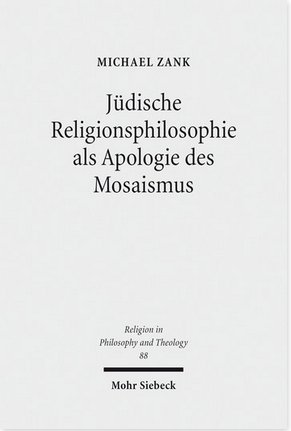
I am pleased to share the publication of my first German book, a collection of essays from the past twenty years, with the title "Jüdische Religionsphilosophie als Apologie des Mosaismus," which roughly translates as "Jewish philosophy of religion as an apologetics of the Mosaic faith." The book introduces to major themes and thinkers in the area of modern Jewish thought, with an emphasis on German Jewish thinkers Hermann Cohen, Martin Buber, Franz Rosenzweig, and Leo Strauss. The third part looks at broader contemporary lessons we might draw from this intellectual tradition. The majority of these essays and lectures appears in print here for the first time.
For more and how to order, see HERE.
By mzank
|
Posted in Uncategorized
|
March 11, 2016 at 11:38 am
I just returned from London, where I participated in a seminar convened by Lord Stone of Blackheath on a two-year old grassroots peace initiative for Israel and Palestine called Two States, One Homeland (TSOH). You can find a longer report on this meeting HERE. In addition to the two founders of this initiative, Tel Aviv-based Israeli journalist Meron Rappoport and Bethlehem-based Palestinian activist Awni al-Mashni who joined via Skype, there were about forty people in the Archbishop's room at Millbank House, which houses offices and meeting spaces serving the UK House of Lords. Participants included potential funders, facilitators, foundation directors, and specialists in a variety of aspects that the convener thought would be useful and ought to be drawn on in helping the initiative to move forward more robustly. I joined this session because I had met Meron, Awni and Avner Haramati, a social entrepreneur who facilitated the London meeting, before. (I wrote about this meeting HERE.)
At the London meeting, we were asked to work on particular themes that were deemed most pressing to chart a way forward for this initiative. I joined the table that discussed the question of religion, where we quickly zeroed in on the most difficult and seemingly intractable issue of Jerusalem and the holy places claimed by Jews and Muslims, especially the Temple Mount/Haram al-Sharif. I thought that TSOH might really make a difference with respect to what others recommend leaving to last by putting it front and center. I am not sure I persuaded anyone of the wisdom of rushing in where angels fear to tread. In any case, you can find my thoughts on this matter HERE.
By mzank
|
Posted in Uncategorized
|
March 5, 2016 at 12:59 pm
By mzank
|
Posted in Uncategorized
|
November 29, 2015 at 10:08 pm
By mzank
|
Posted in Uncategorized
|
June 9, 2015 at 10:07 am
For my latest blog post on Jerusalem, a comment on the recent decision of the US Supreme Court on whether the child of a US person born in Jerusalem should have the right to have his passport say that he was born in Israel, see HERE. On a related subject, see the lecture I gave at the Association for Israel Studies 31st annual conference in Montreal, in June 2015, posted on Academia.edu.
By mzank
|
Posted in Uncategorized
|
October 18, 2014 at 9:50 am
I am looking forward to my talk on Jerusalem for the Brandeis University Schusterman Center for Israel Studies next Friday, October 24, at 12pm.
The topic of my presentation is "Jerusalem in the Religious Studies Classroom: Theoretical Considerations and Topical Issues" and it will be based on an essay recently published in a Syracuse University Press volume on Jerusalem: Conflict and Cooperation in a Contested City, edited by Madelaine Adelman and Miriam Fendius Elman.
By mzank
|
Posted in Uncategorized
|
August 20, 2014 at 12:13 pm
I've been invited back by the fabulous folk at the CAS Core Curriculum to lecture on the Bible in general and the primordial history of Genesis in particular. (Tuesday, Sept 9, 2014, 9:30 am, at the Tsai Performance Center) I've been getting more comfortable with these lectures the more my own children have approached (and now reached) college age. It is very exciting to have the opportunity of framing the discussion of the Bible for two hundred first semester freshmen in fifty minutes or less.
On Oct 1 at 5pm I will lecture for the Institute for Philosophy and Religion (David Eckel, Dir.). This year's series has the title Philosophy and the Future of Religion. My talk will be about whether philosophy can help us understand religion. My somewhat Straussian inclination is to argue that religion and philosophy are completely incompatible. But that would be a polemical position, and I am not sure it is the most productive or even the most accurate position to take. I will need to clarify and limit the topic, and I may be using Varro's distinction between public, philosophical, and poetic religion to structure what we are even talking about when speaking of religion in general. My aspiration is to make this very complex and vast topic relevant for today.
Further out, I am excited about the programs of the Elie Wiesel Center this fall, with Eli Wiesel, Alan Dershowitz, Ami Ayalon, and Sayed Kashua topping the list. (See our website at www.bu.edu/judaicstudies.)
By mzank
|
Posted in Uncategorized
|
July 26, 2014 at 10:44 am
Sue Seligson, reporting for a BUToday's series, wrote a nice little feature on my Jerusalem class, which I recently taught as a summer term class. You can find her article here.
By mzank
|
Posted in Uncategorized
|
February 2, 2014 at 4:31 pm
Just published in an Austrian internet portal dedicated to the work of Elfriede Jelinek, a comment responding to a video-text by the author Adolf Holl on the seven deadly sins. Thesis: without transgression no redemption; without taboo violation no living language. See HERE.
By mzank
|
Posted in Uncategorized
|