

COGNITIVE
By Ava Nagy · April 2026
When I was a kid, I had a violin instructor who could see sheet music come to life. To my astonishment, I had known her for three years before this information came up in conversation. I had been sitting in the eclectic, circular “music room,” in the back of her home, complaining about how difficult it was for me to sightread a piece of music for the first time. I remember I had asked her how she did it so easily, expecting to be met with one of her usual sayings – “practice makes perfect,” or one of its many variations – but this time she only smiled.

CREATIVE
By Samantha Robles Avalos · April 2026
To civilians, he is referred to as Enphine. His real identity is Endorphin. He began working as a vigilante once he reached adulthood, chasing after submerging pain signals that were rising within his hometown. They were rather minuscule and annoying incisions to Enphine. After a year of doing the bare minimum, Enphine realized that he craved more excitement than his mundane work. So, he sought after the biggest corporation known to blood-kind, the Cortex Prime.

NEUROETHICS
By Maya Zubrinsky · March 2026
Jean Piaget, a pioneering psychologist, posits that during the pre-operational stage of cognitive development, children attribute lifelike consciousness, emotions, and intentionality to inanimate objects. According to this same theory, around seven years old logical reasoning begins to supersede this form of imaginative thinking, suggesting that we typically outgrow the egocentric tendency to see nonhuman entities as being relational to ourselves from a young age.

PHARMACOLOGICAL
By Dhara Patel · March 2026
MDMA, commonly referred to as ecstasy or molly, has dominated American club culture and continues to maintain a presence in modern rave and concert scenes despite its risks as a substance with high potential for addiction and abuse. Formally, 3,4-Methylenedioxymethamphetamine (MDMA) is a synthetically manufactured drug that stimulates the user’s nervous system while simultaneously inducing vivid hallucinations.

NEUROBIOLOGY
By Diya Dronavadhyala · March 2026
As the short days on our snowy winter campus are replaced with cherry blossoms and sunny afternoons, it feels like love is wafting through the air. For some, spring represents a season of fresher produce, fruity drinks, and flowery pastries. For others, it represents a new season of hope and romance. In the wake of Valentine’s day, grocery aisles are brimming with candy hearts and chocolate. Our society, for better or worse, inextricably links love with food; as the saying goes, “the way to one’s heart is through their stomach,” and of course, every rom-com viewer will tell you to “trust your gut when it comes to love.” But are these proverbs rooted in any truth? In other words, how important is our gut in shaping our social interactions?

COGNITIVE
By Julia Gendin · January 2026
Bundy, Dahmer, Wuornos. Their stories were always ridiculously captivating to me! Reading about them makes me wonder: what’s happening in their brains? Are serial killers simply born different, or are their behaviors shaped by their environments? Luckily, neuroscience can help answer these questions! By examining the lives and brains of specific killers, we can start to map the monstrous onto the biological.

COGNITIVE
By Amishi Patil · December 2025
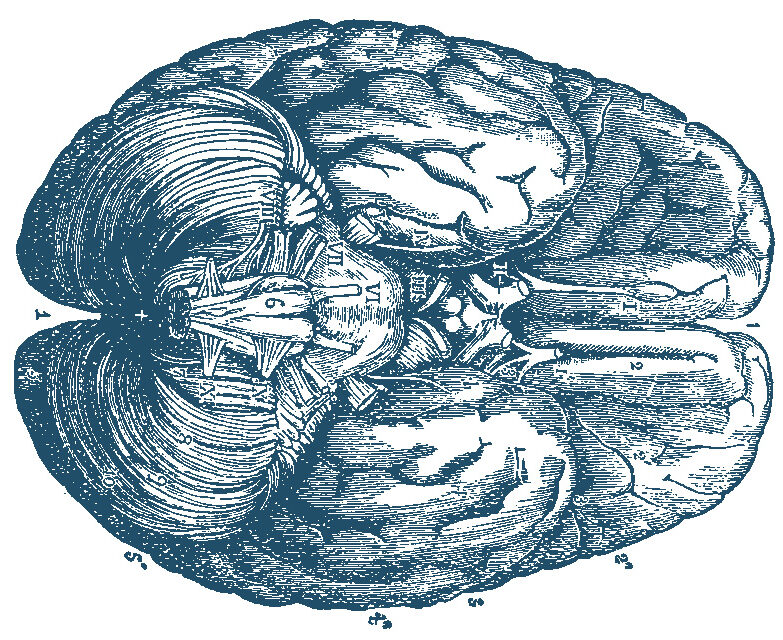
There is a popular myth that claims that men and women’s brains process information differently, which can lead to different decision making, thinking, learning, etc. In our daily lives, we often hear that men are more “logical” and women are more “emotional.” However, scientific research does not support the distinction between the “male” and “female” brain. This idea is a myth that society uses to perpetuate gender norms and stereotypes.
COGNITIVE
By Maya Zubrinsky · November 2025
After an especially long day, you finally get home and begin to wind down. Naturally, without even thinking, you open TikTok. You swipe through an algorithm that feeds you exactly what you are craving— instant gratification. As short-form videos go by, so do minutes, and suddenly it’s been an hour that you feel you have wasted. Yet, nothing is compelling you to stop. Why do we passively rot a brain that is capable of so much more?

COGNITIVE
By Diya Dronavadhyala · October 2025
With Halloween creeping closer and closer, it feels like everyone’s watching something spooky. From replaying classics like It and The Shining to streaming the latest releases like Wednesday on Netflix, scary season is in full bloom this October. Spines tingling, palms sweaty, we subject ourselves to late nights of caramel popcorn and horror movie marathons. But what intrinsic qualities make us humans so obsessed with being scared? What keeps us coming back to the jump scares and psychological thrills in Halloween media? To answer these questions, we can turn to neuroscience to understand the fundamentals of what makes us scared in the first place.