April 9, 2020 at 10:24 am
 Following the University/s announcement that all in-person summer abroad programs have been canceled, the organizers of the Summer Study in Athens asked that we share this announcement of their reconfigured plans for the summer 2020 program:
We know you are all wondering about this year'sSummer Study in Athens. As you may know, Boston University has now canceled summer study abroad programs. However, this will not keep you from experiencing Greek culture AND studying in Greece in 2021.We are planning a virtual Summer Study in 2020 that will help you visit Greece in 2021! To that end, we are planning to offer the following.
- An online course or courses in Greek culture THIS SUMMER that can be transferred to Boston University (and for which scholarships will be available: see below).
- Anyone who takes and passes the online course(s) offered will be guaranteed admission and a scholarship to next years (2021) Summer Study in Athens.
- An additional scholarship of up to $1,000 (applied to the Summer Study 2020 online courses cost) for anyone who registers for a Modern Greek course for this fall semester (Example: CG111).
Essentially, our goal is to allow you to take an online courseat little or no cost this summerand to receive anadditional scholarship and admission to the program for the summer of 2021.Keep a lookout for more messages about courses this summer (and visiting Athens next year)! And stay healthy and safe.
With best wishes,
Prof. L. J. Samons, ljs@bu.edu
By zakbos
|
Posted in Uncategorized
|
Tagged Greece, Summer
|
March 25, 2020 at 10:54 am
If you did not see the Director's email from 3/13 about the way our spring Core courses are adjusting in response to the COVID-19 crisis, you can now find that message on the program website: http://www.bu.edu/core/covid-19.
By zakbos
|
Posted in Uncategorized
|
Tagged Covid-19
|
March 24, 2020 at 6:10 pm
Many millions of people are staying at home, to minimize the risk of transmission, and to adhere to social distancing and shelter-in-place advisories. We caught up with one of our alumni, Kim Santo (Core '98, BU '00 & '02), on Facebook, to ask how she's prioritizing self-care and healthy habits.
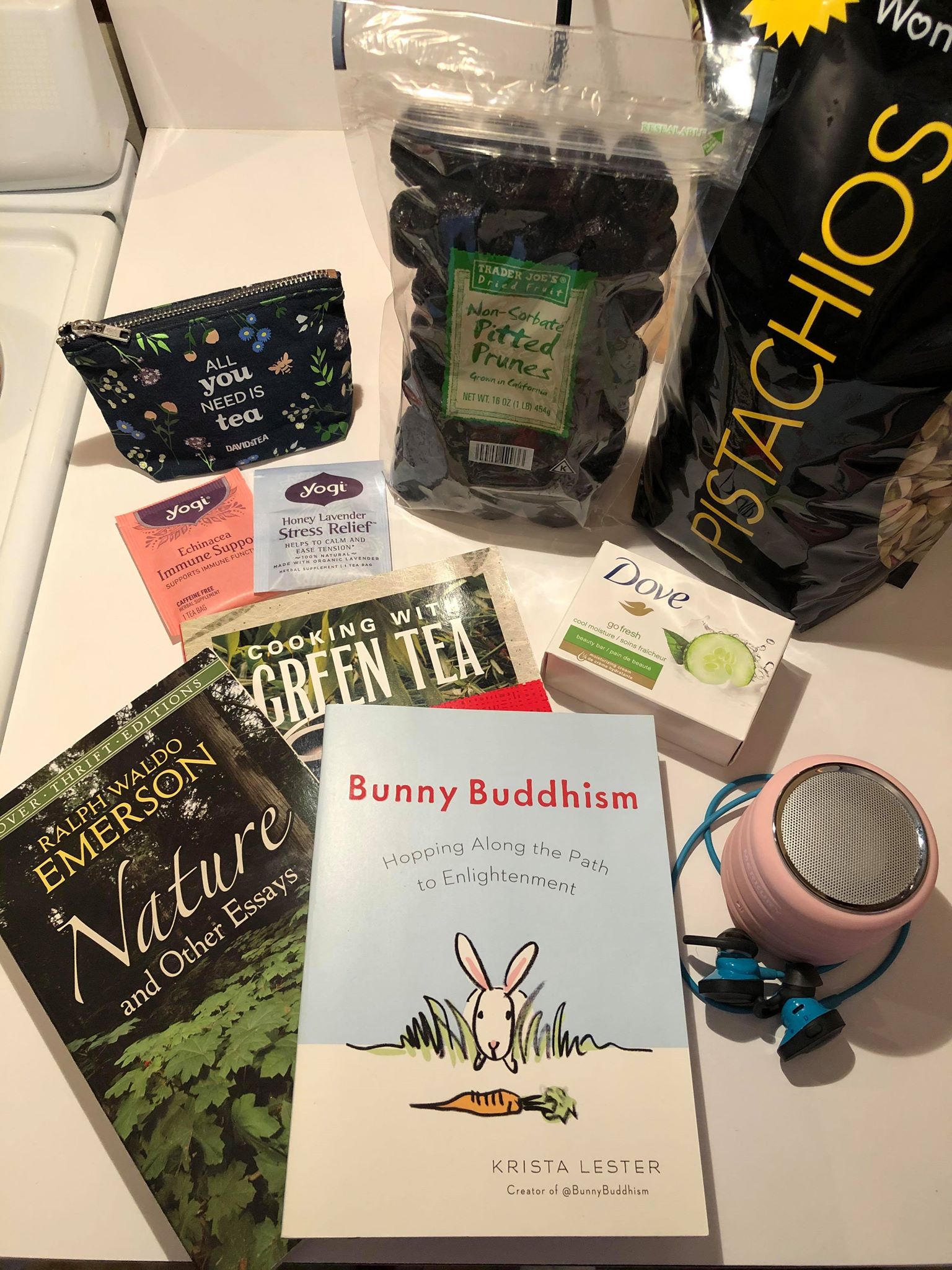
Kim writes:
"Hello, Core! Here are a few self-care recommendations for people stuck at home for the time being.Clockwise from the center top:
- Snacks: Prunes and Pistachios!
- Bar soap (everyone is scrounging for anti-bac liquid - a humble bar of moisturizing bar soap works just fine)
- A way to listen to music, either a Bluetooth speaker or headphones or both
- Some good books, of course. Are we not Core? Cmon now. And...
- Caffeine-free herbal teas are good nerve tonics, but if you want the caffeinated stuff, I recommend plain ol green tea such as Japanese Sencha or Chinese Mao Jian."
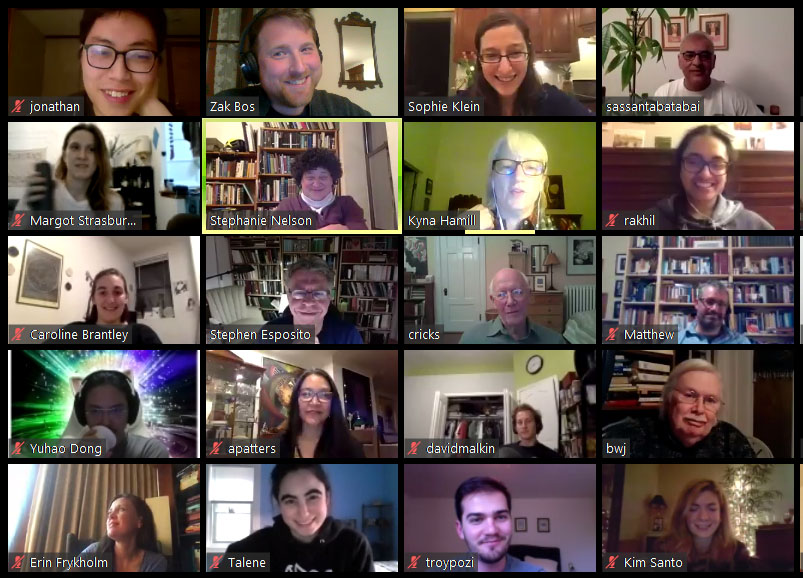
Sound suggestions! Kim is often to be found in the EnCore Facebook group, and has made a commitment to attend as many of our weekly Digital Core Tea gatherings on Zoom through the remainder of this spring semester.
By zakbos
|
Posted in alumni
|
Tagged alumni, Covid-19, tea
|
March 5, 2020 at 10:29 am
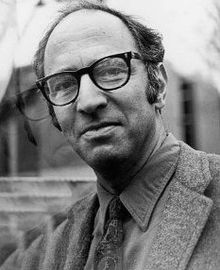
The great thing about science is that it's not always right. For all the theories, equations, and experiments, scientists are just at the mercy of their subjective opinions as any other thinkers-- In other words, science relies on subjective perspective and the consensus of the scientific community to establish what a culture views as an accepted scientific truth. Or at least that's how Thomas Kuhn saw it, as you can see for yourself in a recent article that revisited Kuhn's landmark 1962 work The Structure of Scientific Revolutions. In it, author James Franklin examines Kuhns thesis that scientific theories are no better than ones in the humanities in that they rely on accepted paradigms, and how his theory of Paradigm Shifts changed the scientific and artistic world. When the accepted paradigm or established way of thinking is challenged, the culture faces a radical reassessment of what was previously considered "truth", and thus a new paradigm must be created.
What is your favorite example of a paradigm shift in culture? Or do you have an example of a personal paradigm shift that changed your specific world view? Let us know in the comments!
By hjdion
|
Posted in Academics
|
Tagged paradigm shift, Thomas Kuhn
|
February 26, 2020 at 10:48 am
More often than not, American students entering college feel a sense of anxiety and anticipation as they confront a way of life that is seemingly novel to them. However, this anxiety is diminished by the things that are not novel, namely the language, culture, and mannerisms that remain consistent throughout America. Some students though take the brave step of attending university outside of their home country, for these students the transition to university life is as novel as it could be.
In a recent post on the Asian Review of Books, Peter Gordon reviews Yingyi Ma's new book, "Ambitious and Anxious: How Chinese Students Succeed and Struggle in American Higher Education," which analyzes the experience of Chinese students at American universities. In her book, Ma dispels many stereotypes about Chinese students, but in particular she tackles the misconception that Chinese students who attend American universities have stupendous wealth. In fact, many Chinese students who attend American universities come from more modest backgrounds. Ma also describes the immense stress and anxiety that comes with being an international student. To this point, Ma recommends that American universities do better at including Chinese students in university social life.
This all brings to the forefront questions of inclusivity. It is important to ask if we, here at Boston University and the Core Curriculum are doing enough to facilitate a smooth transition for all our international students. How can we in our daily actions make people feel a little more included today, despite their different background and heritage? This is what we must ask ourselves.
By hjdion
|
Posted in Uncategorized
|
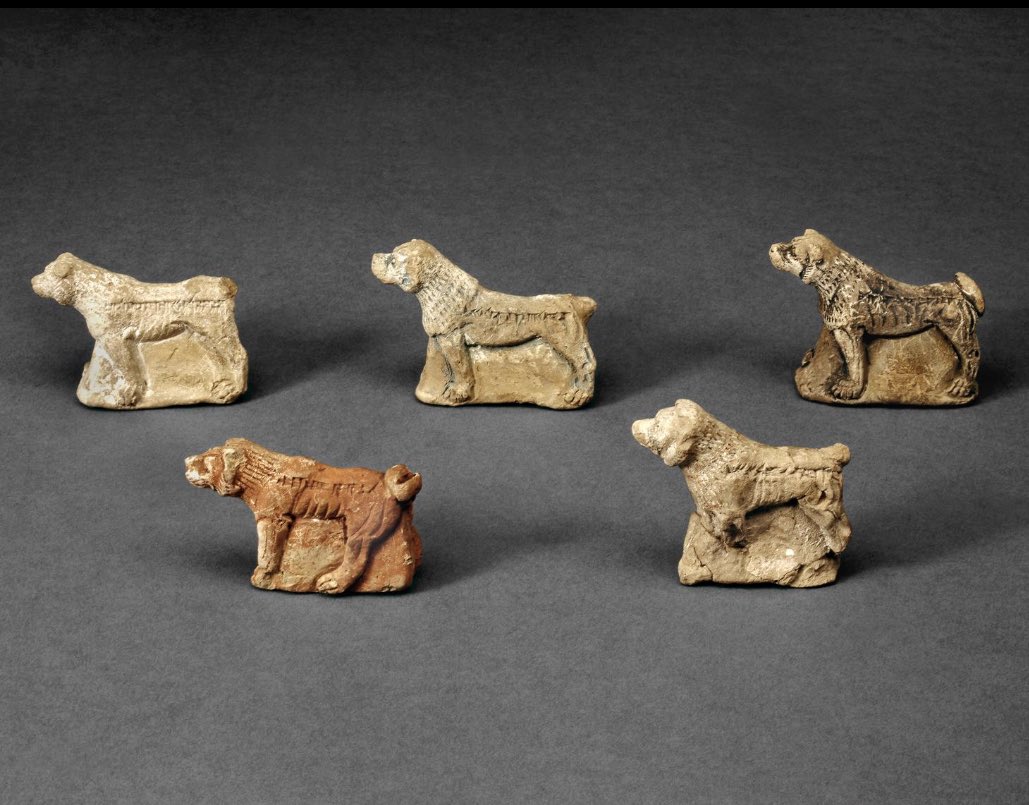 Our first-year students are beginning with the beginning in this first week of the Fall 2020 semester, by reading the oldest book we have written copies of — the Epic of Gilgamesh. In keeping with the Mesopotamian moment, let us share these marvelous little clay dog figurines from the 7th century BCE. We spotted this image on the Twitter feed of Dr. Moudhy Al-Rashid, an Assyriologist, historian of science and post-doctoral researcher at Wolfson College at Oxford.She explains that these were found in a palace at Nineveh, Iraq. The Akkadian cuneiform inscriptions on the pieces give the dogs’ names: